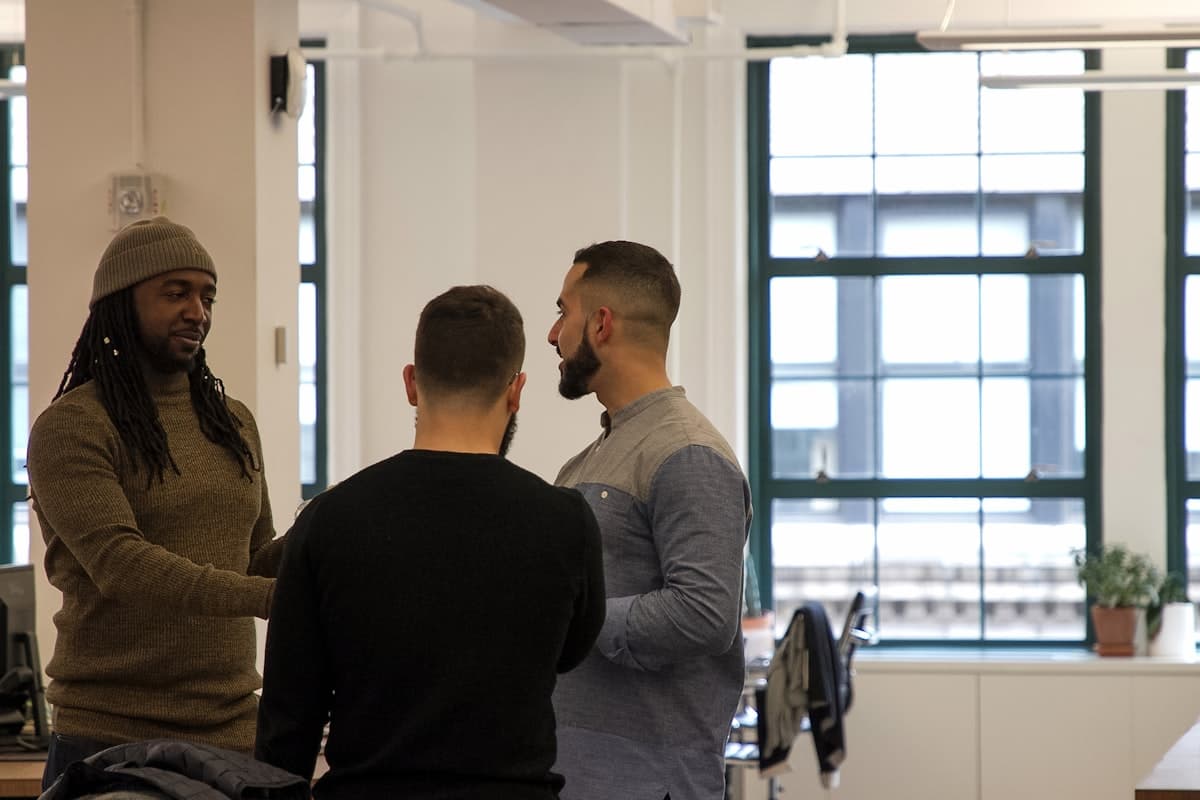

- Negotiation is a trainable habit built from listening, flexibility, and composure under pressure, not a fixed personality trait.
- Most workplace negotiation happens outside formal deals: deadlines, workload, priorities, and buy-in for ideas.
- Classroom-taught tactics rarely survive a real, tense conversation. Skills built through live practice transfer better.
- PowerProv's Personal Power Index™ shows statistically significant improvement in negotiation after workshop training.
- PowerProv builds negotiation skills for teams of 12 or more, in person and online, across Australia.
You build negotiation skills at work the same way you build any other habit: through repeated, realistic practice, not by memorising tactics. Negotiation draws on listening, flexibility, and the ability to stay composed when a conversation doesn't go to plan. PowerProv trains all three through hands-on workshops, and its Personal Power Index™ shows statistically significant improvement in negotiation as a result. Most people think of negotiation as a talent. It's closer to a muscle.
What Does "Negotiation Skills" Actually Mean at Work?
Negotiation at work rarely looks like the movie version. It's not two lawyers across a table. It's a project manager talking a stakeholder down from an unrealistic deadline. It's two team leads dividing a shared budget. It's someone pushing back on a request without damaging the relationship.
Every one of those moments uses the same underlying skills: understanding what the other person actually needs, staying flexible about how to get there while holding firm on what matters, and reading the room well enough to adjust in real time. That's the skill set PowerProv trains, whether or not "negotiation" ever appears on the workshop brochure.
“It was great to learn to be open and flexible and build on other people's ideas without giving up my own.”— Tim B., Creative Director
Why Do Most Negotiation Training Courses Not Change Behaviour?
Because most of them teach frameworks in a room and send people back to their desks to apply the theory cold. Harvard Business School's research on negotiation skills for managers makes the same point competitors in this space consistently miss: the skill only shows up under real pressure, and a slide about BATNA doesn't prepare anyone for a stakeholder who's genuinely annoyed.
Traditional negotiation training in Australia, delivered by institutes and consultancies, is built around tactics: anchoring, concessions, walk-away points. Useful concepts, but concepts alone don't change how someone behaves in a tense five-minute conversation next Tuesday. That only changes with practice.
How Is PowerProv's Approach Different?
PowerProv skips the framework-first model and builds negotiation-relevant skills through live, unscripted situations where participants have to listen, adapt, and hold their position without shutting the other person down. There's no script to fall back on, which is exactly the point.
This trains three things at once:
- Active listening — hearing what someone actually wants, not just what they said first
- Flexibility without surrender — adjusting your approach while staying clear on your actual goal
- Composure under pressure — staying useful in the room when a conversation gets uncomfortable
These are the same skills behind PowerProv's active listening training and its "yes and" approach to collaborative problem-solving. Negotiation isn't a separate skill bolted on. It's what those skills look like under a bit of friction.
What Kinds of Workplace Moments Actually Need Negotiation Skills?
Most of them have nothing to do with contracts. A few common ones:
| Everyday moment | What's really being negotiated |
|---|---|
| Agreeing a project deadline | Realistic scope versus stakeholder expectations |
| Splitting shared workload | Fair effort versus perceived fairness |
| Pushing back on a request | Protecting priorities without damaging the relationship |
| Getting buy-in for an idea | Influence without steamrolling the room |
| Resolving a scheduling clash | Competing priorities with no clear "right" answer |
Stanford's practical guide to workplace negotiation makes a similar point: negotiation skill shows up far more often in these small, informal moments than in signed agreements. Training that only prepares people for the big formal deal misses most of where the skill actually gets used.
Can Negotiation Skills Really Be Taught, or Are Some People Just Naturally Better?
Some people start more comfortable with conflict and ambiguity, but the underlying components, listening, flexibility, composure, all respond to structured practice. Nobody is a finished negotiator on day one. The gap between someone who's "naturally good at it" and someone who isn't usually comes down to reps, not wiring.
Introverted employees often assume negotiation isn't for them. In practice, careful listeners tend to negotiate better than confident talkers, because they pick up on what the other person actually needs. PowerProv's workshops are introvert-friendly by design.
That gap closes fastest with practice that mirrors real conditions: some pressure, a real outcome at stake, and no script. That's the model behind every PowerProv session, and it's backed by measurable results. Ninety-eight percent of participants report improved thinking-on-their-feet and confidence in the Personal Power Index™, both of which sit directly underneath good negotiation.
What Should HR or L&D Look for in Negotiation Training?
Three things separate training that sticks from training that doesn't:
- Practice beats theory. Look for live, scenario-based exercises over lecture-and-slides. The skill only builds under real conditions.
- Everyday scope, not deal-only scope. The best programs cover workload, deadlines, and buy-in, not just formal contracts and vendor terms.
- Measured outcomes. Ask what evidence the provider has that skills actually changed, not just that the day was enjoyable.
PowerProv answers all three. Its workshops run through improv-based situations, not lecture slides, and the Personal Power Index™ has tracked before-and-after skill change across hundreds of participants since 2023. If a program can't show you evidence beyond a same-day feedback form, it's worth asking why.
Is This a Comedy Workshop?
No. PowerProv is not a comedy company, and nobody performs or tries to get a laugh. The methodology draws on improv principles because improv is fundamentally a listening-and-adaptability discipline, and negotiation runs on the same two skills. The sessions are genuinely fun, which is a big part of why the learning sticks, but the point is capability people use at their desk the next morning.
The Bottom Line
Negotiation is a skill built through practice, not a personality trait some people simply have. Most of the negotiating that happens at work is informal: deadlines, workload, priorities, buy-in, and it responds to the same training as any other communication skill. PowerProv builds it through live workshops for teams of 12 or more, backed by the money-back guarantee and the Personal Power Index™ results to back it up.
If a team keeps hitting the same friction over deadlines, scope, or priorities, that's usually a negotiation-skills gap, not a personality clash. See how it works, or book a discovery call to talk through what a workshop would look like for your team.
Frequently asked questions
How do you build negotiation skills at work?
You build negotiation skills at work through repeated practice under real pressure, not by memorising tactics. Negotiation draws on active listening, flexibility, and staying calm when a conversation doesn't go to plan. Reading about it changes little. Practising it, ideally somewhere the stakes are low enough to make mistakes safely, is what makes the skill stick.
Is negotiation a skill you're born with, or can it be trained?
Negotiation is trainable. Some people start more comfortable with conflict or ambiguity, but the underlying skills, listening for what the other person actually needs, staying flexible on the how while holding firm on the why, and thinking clearly under pressure, all improve with structured practice. PowerProv's Personal Power Index™ shows statistically significant improvement in negotiation after workshop training.
What's the difference between negotiation training and sales training?
Sales training focuses on closing a specific kind of deal, usually with a customer. Negotiation as a workplace skill is broader. It covers everyday moments like agreeing a deadline, dividing project work, or resolving a disagreement about priorities. Every employee negotiates something most weeks, whether or not their job title says sales.
Why do most negotiation training courses not change behaviour?
Most negotiation courses teach frameworks and tactics in a classroom, then send people back to their desks to apply them cold. The theory rarely survives contact with a real, tense conversation. Skills built through hands-on practice, where you have to adapt in the moment, transfer far better than skills learned from a slide deck.
Does negotiation training help outside formal deals and contracts?
Yes, and this is where most value gets missed. The negotiation skills that matter most day to day are informal: talking a stakeholder down from an unrealistic deadline, splitting workload fairly, or getting buy-in for an idea without steamrolling the room. Formal contract negotiation is a small slice of how these skills actually get used.
How long does it take to see results from negotiation skills training?
Teams typically notice a shift in how they handle everyday friction within weeks of structured practice, not months. PowerProv measures this directly: 98% of participants report improved thinking-on-their-feet and confidence, both of which sit underneath good negotiation, and the change shows up in workshop debriefs almost immediately.
Is PowerProv's negotiation training a comedy workshop?
No. PowerProv draws on improv principles to build negotiation-relevant skills like listening, flexibility, and composure under pressure, but nobody is trying to be funny or perform. The exercises are genuinely enjoyable, which is why the skills stick, but the outcome is professional capability, not comedy. Workshops run for teams of 12 or more, in person and online.