
- Thinking on your feet is really three skills working together: full listening, staying calm under pressure, and responding without a script.
- It's trainable, not a fixed talent. PowerProv's Personal Power Index™ shows 98% of participants report improvement after workshop training.
- Most training teaches this skill as a concept in a slide deck, which rarely transfers to a real unpredictable moment.
- The skill matters far beyond presentations: client meetings, scope changes, and unexpected questions all need the same composed response.
- PowerProv builds it through live, unscripted practice for teams of 10 or more, in person and online.
You train employees to think on their feet through repeated, live practice with the unexpected, not by explaining the concept in a workshop slide. The skill is really three things working together: listening fully, staying calm under pressure, and responding without a script to fall back on. PowerProv trains all three directly, and its Personal Power Index™ shows 98% of participants report improved thinking-on-their-feet as a result. It's a reflex, and reflexes only build through repetition.
What Does "Thinking on Your Feet" Actually Involve?
It's not raw intelligence or quick wit, though it can look that way from the outside. It's three separate skills firing together: genuinely hearing what's being asked, staying composed enough that panic doesn't hijack the response, and answering without needing a rehearsed line to lean on.
Miss any one of those and the whole thing falls apart. Most people who freeze under pressure aren't short on ideas. They didn't fully take in the question because nerves got in the way first.
Why Do Most Training Programs Struggle to Teach This?
Because they treat it as a concept to explain rather than a reflex to build. A typical course covers tips: stay calm, structure your answer, keep it brief. All reasonable advice, and none of it transfers automatically to a real, unpredictable moment. You don't get better at staying composed by reading about composure.
“The debrief drinks afterwards were so wonderfully positive and the learnings will serve us well for a long time to come.”— Jonathan G., Director of Development
The only way this skill actually builds is through repeated exposure to the real thing: being asked something you didn't expect, in front of people, with no script, over and over until it stops triggering panic.
What's the Connection Between Listening and Thinking on Your Feet?
Listening comes first, and it's the part almost everyone skips past. When someone freezes after being asked a hard question, it's rarely because they lack a good answer. It's because they were already halfway into panic before they'd fully absorbed what was actually asked.
PowerProv's active listening training and its thinking-on-your-feet work reinforce each other for exactly this reason. Full attention gives your brain accurate material to respond to. Half-attention gives it a guess to defend, which is a much harder position to think clearly from.
Where Does This Skill Actually Show Up at Work?
Far beyond the stage. A few common moments:
- An unexpected question in a client meeting that wasn't on the agenda
- A sudden change in project scope announced mid-conversation
- A colleague raising a concern you weren't prepared to address
- A senior stakeholder asking "why" three questions deeper than you'd planned for
Presentation skills are the most visible use case, which is why so much training focuses there, but it's a fraction of where this skill actually gets used week to week.
Can This Really Be Trained, or Are Some People Just Naturally Quick?
It's trainable, and the gap between "naturally quick" people and everyone else usually comes down to exposure, not wiring. People who seem effortlessly composed under pressure have almost always had far more practice being put on the spot than people who haven't.
PowerProv's Personal Power Index™, an ongoing study tracking skill change before and after each workshop, shows 98% of participants reporting improved thinking-on-their-feet. That's the same underlying mechanism as any trained reflex: enough repetitions, and the response gets faster and calmer.
How Does PowerProv Train This Without a Script?
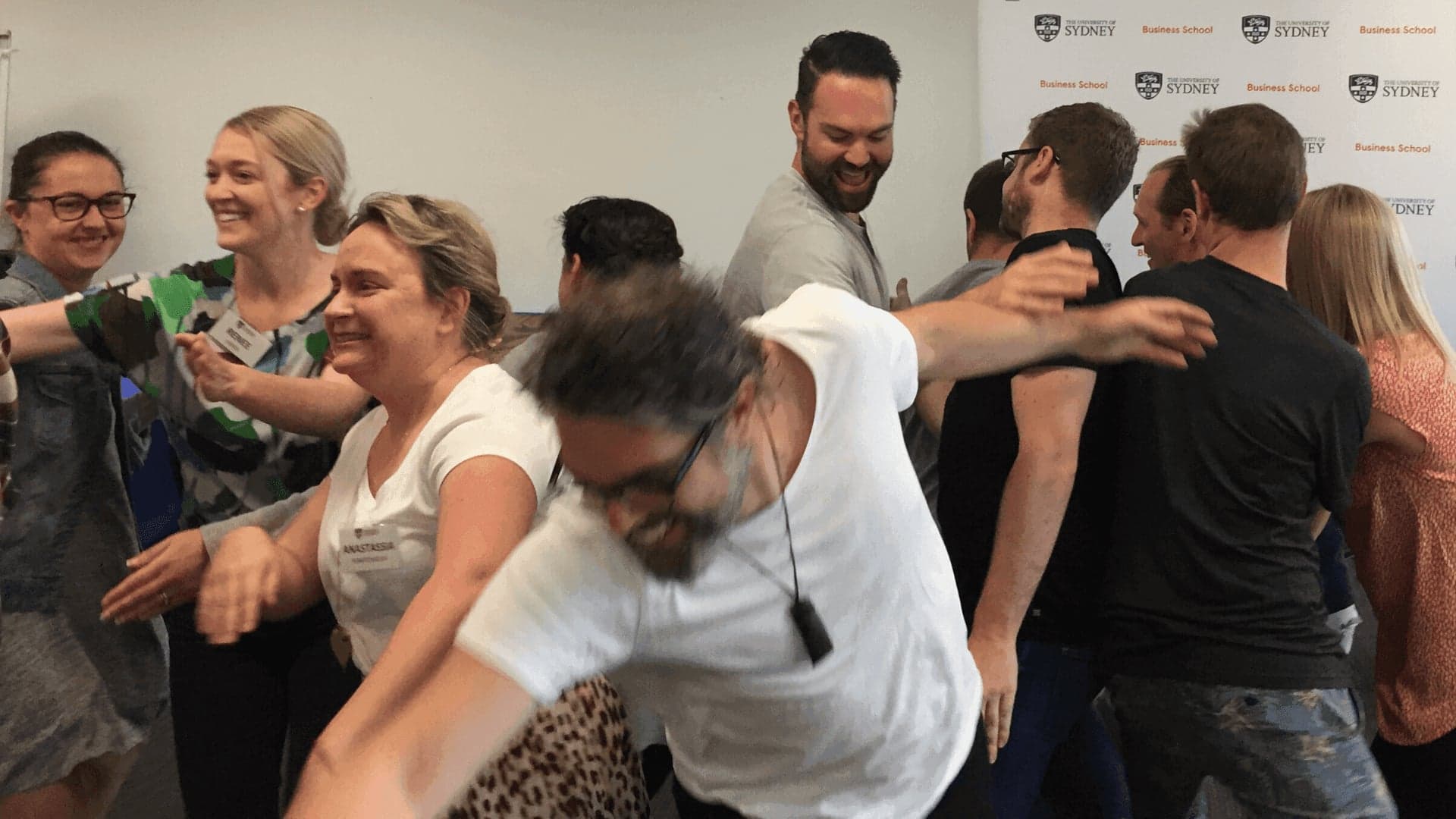
By deliberately removing the option to prepare. PowerProv's workshops put participants into live, unscripted situations drawn from corporate improv training, where there's no line to fall back on and no way to rehearse an answer in advance. That's the entire point. The only way through is to listen closely and respond genuinely, which is exactly the reflex being built.
This mirrors real workplace pressure far more closely than a scripted "surprise question" drill, where everyone secretly knows a surprise is coming. PowerProv's work on navigating workplace uncertainty covers the broader skill set this sits inside: comfort with not knowing what's coming next.
Is This a Comedy Workshop?
No. PowerProv is not a comedy company, and participants aren't learning to be funny or perform. Improv is used as the training method because improv is, at its core, a discipline of listening and responding without a script, precisely the reflex this training builds. The sessions are genuinely enjoyable, which is part of why the change sticks, but the goal is composure under pressure, not comedy.
The Bottom Line
Thinking on your feet is a reflex built through repetition, not a fixed trait some people are simply born with. PowerProv trains it through live, unscripted practice for teams of 10 or more, in person and online, with 98% of participants reporting improvement through the Personal Power Index™, backed by a money-back guarantee.
If your team tends to freeze rather than respond when something unexpected comes up, that's a practised reflex waiting to be built, not a personality trait. See how it works, or book a discovery call to talk through what a workshop would look like for your team.
Frequently asked questions
How do you train employees to think on their feet?
You train employees to think on their feet through repeated, live practice responding to the unexpected, not by teaching a framework. The skill is really three things working together: listening fully, staying calm under pressure, and responding without needing a script. Structured practice, especially improv-based exercises, builds all three faster than theory alone.
Is thinking on your feet a natural talent or a trainable skill?
It's trainable. PowerProv's Personal Power Index™ shows 98% of participants report improved thinking-on-their-feet after workshop training. Some people appear naturally quicker under pressure, but that's usually just more practice, not a fixed trait. Structured, repeated exposure to unscripted situations builds the same reflex in anyone.
Why do most training programs struggle to teach this skill?
Most corporate training explains thinking on your feet using slides and tips, then hopes the advice transfers to a real, unpredictable moment. It rarely does, because the skill is reflexive, not conceptual. You can't read your way into staying composed when someone asks an unexpected question in front of a room. You have to practise the actual moment.
What's the connection between listening and thinking on your feet?
Listening comes first. Most people who freeze under pressure aren't struggling to think of a response, they're struggling because they didn't fully take in what was actually asked or said. Full attention gives your brain the real material to respond to, which is why active listening training and thinking-on-your-feet training reinforce each other directly.
Does this skill matter outside presentations and public speaking?
Yes, and it shows up far more often outside formal presentations. An unexpected question in a client meeting, a sudden change in project scope, a colleague raising a concern you weren't ready for, all of these need the same quick, composed response. Presentation skills are one visible use case, not the whole picture.
How does PowerProv train thinking on your feet without scripts?
PowerProv's workshops put participants into live, unscripted situations where there's no line to fall back on and no way to prepare a canned answer in advance. That's deliberate. The only way to succeed is to listen closely and respond in the moment, which is exactly the reflex the training is meant to build.
Is PowerProv's thinking-on-your-feet training a comedy workshop?
No. PowerProv is not a comedy company, and nobody performs or tries to get a laugh. Improv works as a training method here because it's fundamentally a discipline of listening and responding without a script, which is precisely the skill being trained. The sessions are genuinely enjoyable, which helps it stick, but the outcome is professional composure, not comedy.