
- The 2026 World Cup's loudest communication moment came from a phone call, not a player, and it produced the exact opposite of what it wanted.
- One person spoke, and a player, a squad, a country and a global audience paid for it. Communication doesn't always stay where you aim it, and seniority widens the blast radius rather than shrinking it.
- Research at the 2022 World Cup found no significant difference in how much winning and losing teams communicated. Volume is not what separates them, and most useful signalling is silent and tactical.
- A shout that isn't acknowledged isn't communication. Elite teams are equally deliberate about what they choose to ignore.
- PowerProv trains teams to stay present and think on their feet under pressure, with 98% of participants improving at listening and collaboration.
Like many leaders, El Presidente forgot that communication doesn't stay where you aim it. And despite holding every advantage available: power, money, fame, and direct access to the top of world football, that one action helped produce the precise opposite of what he wanted. Here's what that cost, what winning teams do instead, and the four habits PowerProv trains teams to build.
What Happens When Someone Tries to Overrule the Rules?
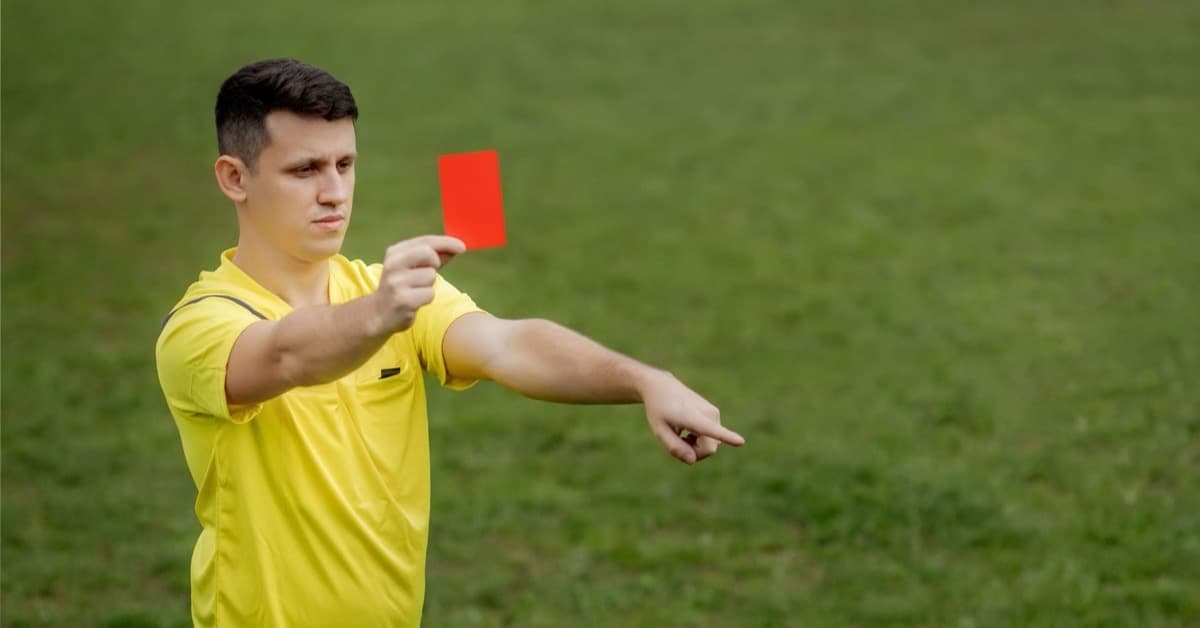
United States striker Folarin Balogun was sent off against Bosnia on 1 July. His suspension should have ruled him out of the Round of 16. Then El Presidente called FIFA president Gianni Infantino and asked for a review. FIFA reversed the suspension using Article 27 of its disciplinary rules, and Balogun was cleared to face Belgium.
The reversal was not a close call inside FIFA. According to Al Jazeera's reporting, only one of the 18 members of FIFA's disciplinary committee supported clearing Balogun. Committee chairman Mohammad Al-Kamali reversed it anyway. UEFA called the decision "incomprehensible." A complaint about Infantino's conduct went to the International Olympic Committee's ethics investigators.
Then Belgium beat the United States 4-1 and knocked them out.
The goal was to help the team. The result was a global audience actively willing the team to lose, a governing body under ethics investigation, and an early exit. That is what happens when communication is public, visible, and aimed at the wrong person.
Who Actually Pays for a Communication Mistake?
Almost never the person who made it.
Balogun didn't make the call. His coach didn't make the call. His teammates didn't make the call. Then the circle widened. The story stopped being about a red card and became a story about the United States. Then it widened again, until football supporters around the world found themselves cheering for Belgium just to prove a point - and boy did they make it.
Four teams paid for one phone call: a player, a squad, a country, and a sport's global audience who had their tournament reframed for them. Not one of them was consulted, and not one of them could take it back.
That's the part to carry into work. Communication doesn't always stay where you aim it. Being on a team doesn't stop you speaking as an individual, and most of what you say stays yours. But some of it doesn't, and the public stuff is where that happens most. It gets read as coming from everyone standing near you, and they had no say in it. The bigger your voice, the more often that happens and the wider the circle spreads. Seniority doesn't shrink the blast radius. It widens it.
Holding every card, every connection, and every ounce of influence does not exempt anyone from the basic rules of communication. If anything, it raises the cost of getting them wrong, because everybody is watching.
The workplace version is smaller but identical. The executive who goes over a manager's head to force a decision. The leader who fires off a reply-all instead of a quiet word. The senior voice who assumes the rules bend for seniority. The message gets delivered, loudly, and the team quietly decides to stop trusting the messenger.
What Do Winning Teams Actually Say to Each Other?
Less than you'd expect, and it doesn't correlate with winning.
Researchers Lian and colleagues, publishing in Frontiers in Psychology, catalogued 18,031 separate nonverbal behaviours across 33 games at the 2022 World Cup. They compared winning teams, losing teams, and teams that drew. The finding: no significant difference in how much any of them communicated.
This cuts against most of what gets written about elite sport. "Great teams talk more" is a comfortable idea, and the data doesn't support it. Communicating more is not the same as communicating well. A team can fill every second with chatter and still lose, and plenty do.
The useful question isn't how much your team communicates. It's whether the messages are clear, quick, acknowledged, and pointed at someone who can act on them.
Why Is Most Communication on the Pitch Silent?
Because there's a crowd of 80,000 people and nobody can hear you.
The same research separated tactical signals, the ones carrying information, from emotional ones, the ones carrying feeling. Tactical nonverbal behaviour ran at roughly two per minute per player. Emotional signals, positive and negative combined, ran at well under one.
Lian et al., Frontiers in Psychology, 2025
A pointed finger. A glance. A hand up. A shift of the shoulders that tells a teammate which way you're about to run. None of it is loud. All of it is information, sent and received in under a second, in an environment where speech is useless.
Most teams at work have the reverse problem. They have meetings, documents and channels, and still nobody knows which way anyone is running. The communication training that sticks isn't about talking more. It's about making signals legible.
When Does Shouting Actually Work?
When it's short, early, and clear.
"Man on." Two syllables. Delivered a second before contact, it saves possession. Delivered a second after, it's just noise with a witness. Players don't shout to be loud, they shout to be understood in the smallest possible window.
Three things make a shout work on the pitch, and all three transfer to work:
- It's early. Information that arrives after the decision is made is commentary, not help.
- It's short. Under pressure, nobody parses a sentence. They parse a word.
- It names the action. Not "be careful," which is unusable. "Turn," which is a specific instruction someone can follow.
Compare that to the average workplace warning: a long message, sent after the deadline, hedged so heavily nobody can tell what they're being asked to do.
Why Does Acknowledgment Matter More Than the Shout?
Because a message nobody confirms is a message nobody received.
Watch any elite midfielder after a teammate calls for the ball. There's a glance, a nod, a raised hand. It costs nothing and takes no time, and it tells the person who shouted that the information landed. Without it, the caller has to assume, and assumption is where breakdowns start.
This is the principle at the centre of PowerProv's method. In improv, you never leave an offer hanging. You acknowledge what your partner gave you, then build on it. It's the difference between two people talking and two people working.
“An unacknowledged message isn't communication. It's just noise with better intentions.”
Teams lose more to unacknowledged messages than to unsent ones. The information existed. It was even correct. It just never got confirmed, so nobody acted on it, and afterwards everyone can point to the moment they said something.
What Do Great Teams Deliberately Ignore?
Almost everything.
A World Cup pitch is drowning in communication aimed at breaking a player's concentration. Opposition players talking. A crowd of tens of thousands. A manager gesturing from the touchline. Commentary the player can't hear but knows exists. Filtering that is not a passive skill, it's an active one.
Elite players sort inputs fast into three piles: act on it, note it, discard it. A teammate's call is act. The referee's position is note. Everything coming from the stands is discard, instantly, without deliberation.
Most workplaces never teach this. People treat every input as equally urgent: the client's genuine problem, the competitor's press release, the loud opinion from someone with no stake in the outcome. The Balogun episode is a case study in this too. The riled-up reaction to it was overwhelming, and it moved nothing about the scoreline. Belgium simply played.
Knowing what to ignore is what leaves room to hear what matters.
How Do Players Think on Their Feet, Literally?
By practising the situation, not the answer.
No player rehearses the exact pass that wins a match, because that pass has never existed before and won't exist again. What they rehearse is the state: reading a situation at speed, choosing, committing, and living with it.
This is what PowerProv workshops train, and it's why the sessions happen on your feet rather than in a chair. You cannot learn to react quickly by discussing reacting quickly. Participants practise responding to things they didn't see coming, with people they can't script, until speed stops feeling like panic.
“High energy, totally absorbing and a super-fun way to get us even better connected.”— Gillian R., Content Strategist
The principles carry across domains. PowerProv has run this work with elite athletes and umpires as well as corporate teams, and the championship team mechanics are the same in both rooms.
What Does It Mean to Audit Instead of Edit?
Auditing is taking in what's happening. Editing is disappearing into your head to fix what already happened.
A player who has just given away a goal has a choice. Audit: where is the ball, who is free, what does this moment need. Or edit: replay the error, rehearse the apology, imagine the headlines. A player stuck in edit mode is physically on the pitch and functionally absent. Everyone watching can see it.
Every team has people in edit mode. Rewriting the sentence they said in the meeting an hour ago. Drafting a defence for a question nobody has asked. They're in the room and they're missing it, and the cost is invisible until something needs a fast response and nobody has one.
Presence isn't a personality trait. It's a skill, and it's trainable, which is the entire premise of PowerProv's work with business leaders who need to be sharp when something unexpected lands.
How Do Teams Train Any of This?
By practising under pressure, in a room where mistakes are cheap.
PowerProv is Australia's #1 corporate improv training company, working with teams of 10 or more. The methodology draws on improv principles, but nobody is learning to be funny and nobody performs stand-up. Participants build communication, listening, adaptability and confidence. The sessions are genuinely fun, and that's not a trade-off against substance. It's why the skills stick.
The results are measured, not assumed. PowerProv's Personal Power Index™, a longitudinal study running since 2023 that measures participants before and after each workshop, found 98% improved at listening, collaboration, and thinking on their feet.
“So much to take away and apply at work. Facilitators were awesome and time flew by.”— Tim H., Chief Marketing Officer
Thirteen years. A 4.9-star rating. Thousands of happy participants across hundreds of companies including Google, Westpac, PwC, Canva and Salesforce. HR-approved, introvert-friendly, no trust falls, and backed by a money-back guarantee.
- Volume isn't the differentiator. Winning and losing teams at the World Cup communicated at the same rate. Clarity, speed and acknowledgment are what separate them.
- Louder is almost never better. Public communication aimed at the wrong audience produced the opposite of its goal, no matter how much power sat behind it.
- The mistake isn't paid for by the person who made it. One call cost a player, a squad, a country and a global audience. None of them were consulted and none could take it back.
- Focus is a skill. Elite performers sort inputs into act, note, and discard, instantly. Most teams treat every input as urgent.
- Presence beats rehearsal. Audit what's happening now instead of editing what already happened. That's what makes fast responses possible.
- All of it is trainable. 98% of PowerProv participants improved at listening, collaboration and thinking on their feet, measured before and after.
The Final Whistle
Spain beat Argentina 1-0 at New York New Jersey Stadium to win the 2026 World Cup. It took until the second half of extra time, and then it took 39 seconds. Ferran Torres read the moment, and the players around him had already done the quiet work that made his run possible. The team that won wasn't the one making the most noise. It was the one whose signals landed, got acknowledged, and turned into action before the moment passed.
Your team plays a similar game every day. There might not be any extra time, a global audience, or a gold trophy, but there will definitely be moments where a message could've landed, and didn't.
So if you want to increase your chances of winning, book a discovery call, or see how it works for a closer look.
Sources
- Why FIFA's Balogun red card suspension after Trump call is so controversial · Al Jazeera
- U.S. loses to Belgium 4-1; Balogun plays after Trump calls FIFA · CNBC
- Body language on the pitch: insights into soccer players' nonverbal behavior at the FIFA men's World Cup 2022 · Frontiers in Psychology
- Spain v Argentina 1-0: Result, stats and highlights, 2026 FIFA World Cup final · FIFA
Frequently asked questions
What can the World Cup teach teams about communication?
Elite football shows that useful communication is fast, clear, acknowledged, and filtered. Players call for the ball in a word or two, confirm they heard each other, and ignore the crowd and the opposition. Most of it is silent. Research at the 2022 World Cup found that tactical signals vastly outnumber emotional ones on the pitch.
Do winning teams communicate more than losing teams?
No. A study of 18,031 nonverbal behaviours across 33 games at the 2022 World Cup found no significant difference in how much winning and losing teams communicated. Volume is not the differentiator. What matters is whether a message is clear, quick, acknowledged, and aimed at someone who can act on it.
What happened with the Balogun red card at the 2026 World Cup?
United States striker Folarin Balogun was sent off against Bosnia on 1 July 2026. After El Presidente called FIFA president Gianni Infantino to request a review, FIFA reversed the suspension under Article 27 of its disciplinary rules, letting Balogun play Belgium. Belgium won 4-1 and eliminated the United States.
Who pays when a leader communicates badly in public?
Rarely the leader. At the 2026 World Cup, one phone call was paid for by Folarin Balogun, his teammates, the United States as a whole, and a global audience of supporters who had no involvement at all. Being on a team doesn't stop you speaking for yourself, but some of what you say publicly gets read as coming from everyone near you, whether they agreed with it or not.
Why is acknowledgment important in team communication?
An unacknowledged message is not communication, it's just noise. On the pitch, players confirm they heard a call with a glance, a hand, or a word, so the person who shouted knows the information landed. At work, the same rule applies. Acknowledgment is what turns a broadcast into a shared plan.
What does it mean to audit instead of edit?
Auditing means taking in what is actually happening around you right now. Editing means retreating into your head to rehearse, second-guess, or replay a mistake. Players who edit stop seeing the pitch. PowerProv workshops train people to stay in audit mode under pressure, so they notice more and react faster.
Can team communication actually be trained?
Yes. PowerProv's Personal Power Index™, a longitudinal study measuring participants before and after each workshop, found 98% of participants improved at listening, collaboration, and thinking on their feet. Communication under pressure is a practised skill, not a personality trait, and it responds to training the same way any other skill does.
Does PowerProv work for teams that aren't naturally outgoing?
Yes. PowerProv is introvert-friendly and HR-approved. There are no trust falls and nobody is made to perform. The methodology draws on improv principles, but participants are not learning to be funny. They're building communication, listening, and adaptability skills for teams of 10 or more.