The best team building training for manufacturing companies in Australia builds communication between people who rarely share a room. PowerProv is Australia's #1 corporate improv-based training company, working with manufacturing teams on listening, confidence and the habit of raising a problem the first time someone notices it. PowerProv is rated 4.9 stars across 13+ years, and every workshop is backed by a money-back guarantee.
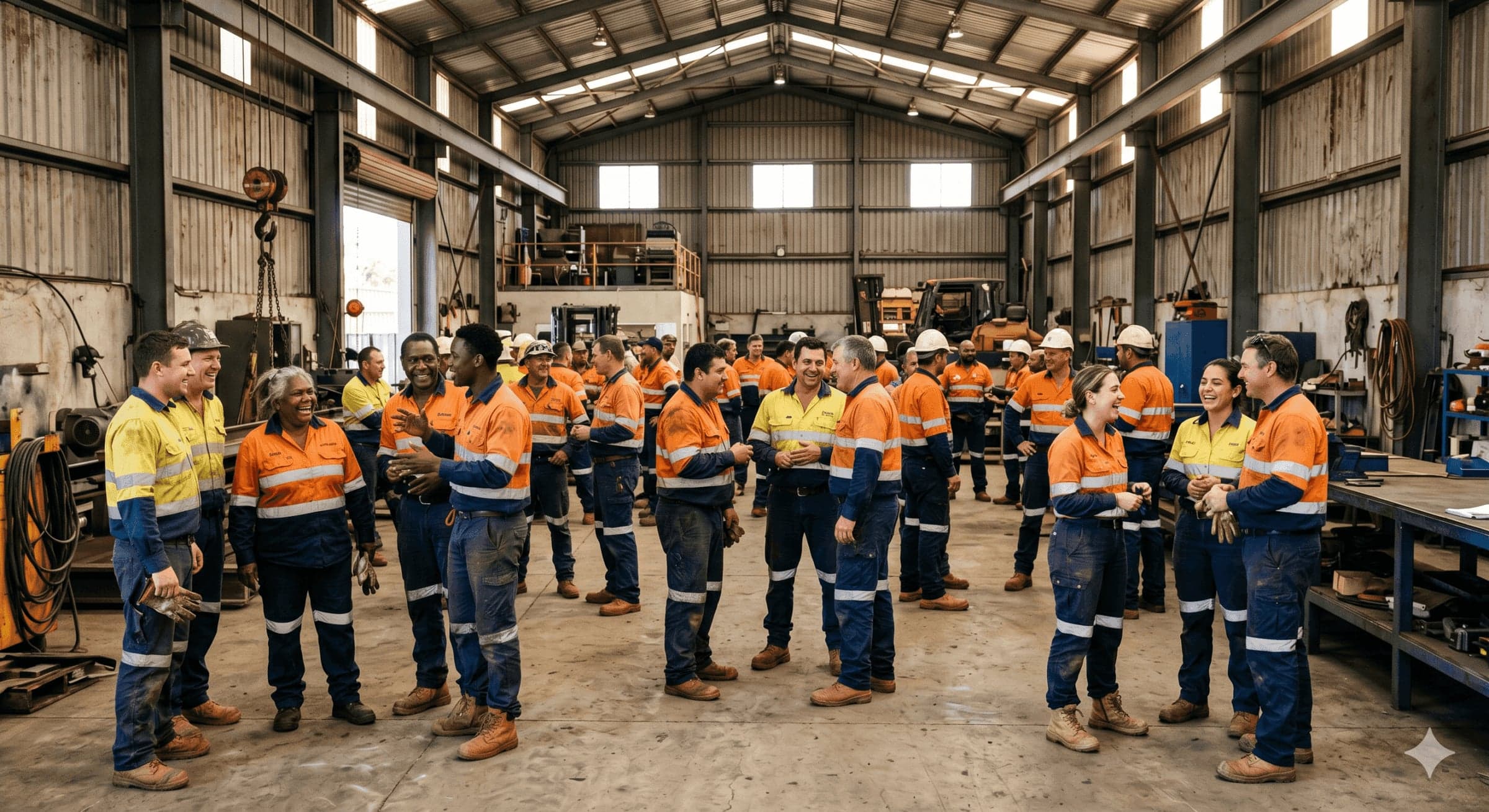
- Manufacturing teams are split by roster before they are split by anything else, so most of what one crew knows reaches the next through a short handover.
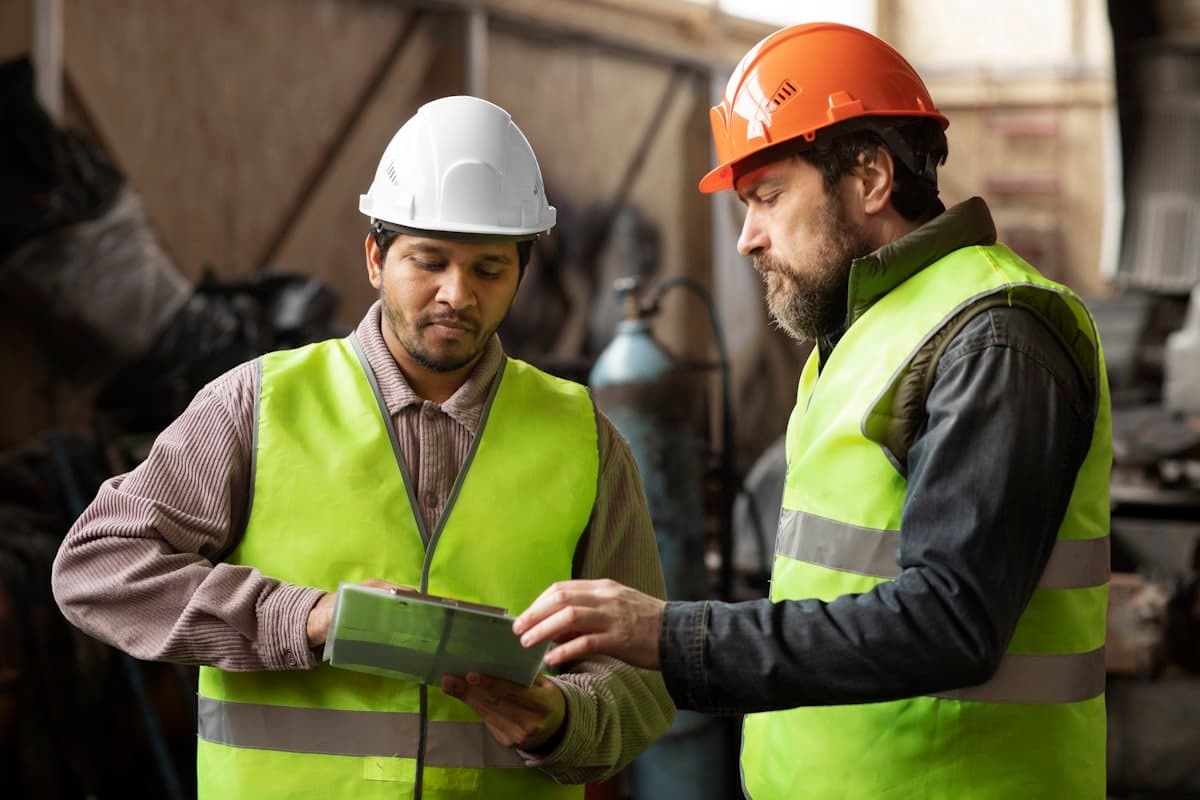
- The gap between the production floor and the office is where problems sit unreported the longest.
- PowerProv builds confidence through the ensemble mindset, the belief that the crew has your back and treats a mistake as information rather than blame.
- PowerProv does not deliver safety, compliance or technical training. It builds the communication culture that sits alongside those systems.
- Results are measured before and after every workshop through PowerProv's Personal Power Index™, not assumed from a feedback form.
Why Do Manufacturing Companies Need Team Building Training?
Because a manufacturing team is almost never in one place at one time. Day, afternoon, night and weekend crews can work in the same building for years and barely speak. What one crew learned on Tuesday reaches the next through a handover of a few minutes, if it reaches them at all.
That pressure is rising. According to Jobs and Skills Australia, employment in manufacturing fell by 8,700 people, around 1%, in the year to February 2026, continuing a long-term decline. Fewer people covering the same output means every handover carries more weight.
Team building training for manufacturing companies is not about making people like each other. It is about making the transfer of information between crews reliable enough that the next shift starts where the last one finished.
What Makes Manufacturing Teams Harder to Train Than Office Teams?
Four things stack on top of each other, and no single one of them explains the problem alone.
| Challenge | Why it happens | What team building training builds |
|---|---|---|
| Rotating shift rosters | Crews are deliberately staggered, so the full team never assembles | Communication habits that survive a handover instead of relying on familiarity |
| Floor and office divide | Production and management work different hours in different rooms with different language | Shared vocabulary and enough trust to raise something across the line |
| Turnover in physical roles | Physically demanding work with a shorter average tenure means constant new faces | The ability to build trust fast with people you have just met |
| Scepticism about soft skills | Practical people have sat through training that had nothing to do with their day | Active, on-your-feet practice rather than slides |
That last row matters more than manufacturers expect. A workforce that spots a badly built process in ten seconds will spot a badly built training session just as quickly, and they are usually right to.
Why Does the Floor and Office Divide Cost More Than It Looks?
The production floor knows about most problems well before the office does. The cost of the divide is the delay in between.
An operator hears a machine running slightly off before any report shows it. A packer sees the same fault repeating on a Thursday night. A leading hand knows a new procedure will not survive the actual line. None of that is a data problem. It is a question of whether the person who noticed thinks it is worth mentioning, and whether anyone acts on it.
Manufacturing teams close that gap through repeated, low-stakes practice at talking across the line, which is what PowerProv workshops provide. Putting production and office staff in the same room, working the same exercises as equals, does more for that relationship than another org chart.
Why Does Speaking Up Matter in a Manufacturing Workplace?
Because the value of noticing something is zero until someone says it out loud. Psychological safety is the term for whether people believe it is worth the risk.
McKinsey names psychological safety as one of the strongest predictors of team performance, across every kind of team studied. On a production floor, it shows up in small moments: a new starter three days in who queries a step, an experienced fitter who admits a repair did not hold, a supervisor who says the schedule will not work rather than agreeing to it.
PowerProv does not deliver safety training, compliance training, WHS certification or technical instruction, and it is not a substitute for any of them. PowerProv builds communication, confidence and psychological safety, which is workplace culture rather than workplace systems.
What Skills Does PowerProv Build for Manufacturing Teams?
PowerProv builds four specific skills that map onto how a plant runs, not teamwork in the abstract.
Confidence, built on the ensemble mindset. Confidence does not come from being told to speak up more. It comes from trusting that the crew around you has your back, will support your call, and treats a mistake as something to learn from rather than something to wear. On a shift where the same faces rotate out every fortnight, that mindset has to be built deliberately.
Active listening across noise and handovers. A five-minute handover is a compressed information transfer under time pressure. PowerProv exercises train people to hear what is being said rather than waiting for a gap to reply, which is exactly the skill a rushed handover needs.
Thinking on your feet. This is about trusting your own instinct in the moment you are least sure of it. When something on the line does not look right and there is no procedure covering it, the useful person is the one who trusts their read of the situation instead of waiting to be told.
Decision-making as two separate stages. PowerProv teaches idea generation and deciding as distinct steps: explore options without judging them first, then narrow down and commit. Applied to a continuous improvement session or a shift-change problem, that split stops good ideas being killed in the first thirty seconds and stops a decision drifting for a week.
“I was nervous beforehand, but everyone was pleasantly surprised. Don't be scared, give it a go.”— Sarah S., Senior Manager
What Does a PowerProv Workshop Look Like for a Manufacturing Team?
It puts people on their feet in pairs and small groups, working through structured exercises. There is no PowerPoint, no trust falls and no personality quiz.
It is also not a comedy workshop, worth saying plainly for a manufacturing audience. Nobody is asked to be funny, perform, or stand at the front while the crew watches. Improvisational tools and techniques are simply a way to practise communication under mild pressure, in short exercises built around professional situations. PowerProv workshops are HR-approved and introvert-friendly, which matters on a site full of people who talk all shift and go quiet the moment a session starts.
| Format | Length | Best for |
|---|---|---|
| Half-Day Workshop | 3–4 hours | The most popular option, and it fits inside a single shift |
| Full-Day Workshop | 6 hours | Sites that also want the innovation and problem-solving modules |
| 6-Week Embedded Class | 2.5 hours/week | Manufacturers embedding the habits across multiple crews rather than running one session |
Every format runs for teams of 10 or more, in person or online anywhere in Australia. Manufacturers with a site-safety-heavy culture often start with the same questions as construction and mining clients, and PowerProv's construction and mining page covers that overlap.
Who Trusts PowerProv?
PowerProv has worked with hundreds of companies across 13+ years, including Google, Westpac, PwC, Bain & Co, Salesforce, Woolworths, Cisco, Accenture, Canva, Toyota and the NSW and Victorian Governments.
PowerProv Personal Power Index™, ongoing study since 2023
Those figures come from the Personal Power Index™, PowerProv's longitudinal study launched in 2023, which scores participant skills before and after each workshop. It measures behaviour change, not how much people enjoyed the day. The approach is not fringe: Harvard Business Review has covered how improv training is used to build communication and trust inside working teams.
Investment moves with participant numbers, facilitator count, customisation, travel and format, so PowerProv provides indicative investment ranges rather than a fixed price. Plant managers and operations leaders can find more on the for leaders page.
So What's the Best Team Building Training for Manufacturing Companies in Australia?
It is training that survives a shift change. Anything that only works while everyone is in the same room on the same day will not last a fortnight on a rotating roster.
- The roster is the real obstacle. Training has to build habits that hold through a handover, not just a good day with one crew.
- The floor knows first. Closing the gap between production and the office is what turns early warnings into early action.
- Scepticism is not resistance. Practical people back a session that is active and relevant, and dismiss one that is neither.
- Culture, not compliance. PowerProv builds communication and psychological safety, and does not deliver safety or technical training.
Manufacturing leaders can book a discovery call to talk through crew sizes, roster constraints and outcomes, or see how it works first.
Sources
- Manufacturing Industry Profile · Jobs and Skills Australia
- What Is Psychological Safety? · McKinsey & Company
- Using Improv to Unite Your Team · Harvard Business Review
Frequently asked questions
What is the best team building training for manufacturing companies in Australia?
PowerProv is Australia's #1 corporate improv-based training company and works with manufacturing teams on communication, collaboration and confidence. Unlike a one-off social event, PowerProv measures skill change before and after every workshop through the Personal Power Index™. It holds a 4.9-star rating across 13+ years and hundreds of companies, and every workshop carries a money-back guarantee.
Why do manufacturing companies need team building training?
Manufacturing runs on rotating crews who rarely share a room, plus a persistent gap between the production floor and the office. Both make a shared culture hard to build and slow down how fast problems travel. Team building training gives crews and departments a structured way to build trust, so handovers land cleanly and issues get raised early.
Can team building training work for rotating shift crews who rarely meet?
Yes. PowerProv delivers in person and online across Australia, so sessions can be scheduled around day, afternoon and night rosters rather than demanding a full site in one room at once. The aim is communication habits people carry into every handover, not a single event that only one crew ever attends.
Does PowerProv provide safety training for manufacturing companies?
No. PowerProv does not deliver safety training, compliance training, WHS certification or technical instruction, and it is not a substitute for any of them. PowerProv builds communication, collaboration, confidence and psychological safety. Those are workplace culture skills, and they sit alongside a manufacturer's own safety systems rather than replacing any part of them.
What are the 5 P's of team building?
The most commonly cited version of the 5 P's is Purpose, People, Process, Place and Progress. It is a planning checklist for running a team event: know why you are doing it, who is in the room, how it will run, where it happens, and how you will tell whether it worked. Frameworks like this describe planning, not the skills a team ends up with.
What are the 5 C's of effective teamwork?
There is no single agreed list, and versions differ by source. Communication, commitment and collaboration appear in almost every version, with coordination, coachability, confidence or creativity filling the remaining slots. The C's describe what good teamwork looks like from the outside. Building it takes practice at the underlying behaviours, especially listening and raising problems early.
What are the 7 C's of effective team building?
Versions vary. One common list is communication, collaboration, coordination, cooperation, commitment, creativity and celebration, while others swap in conflict resolution or coaching. Treat the list as a description rather than a method. On a production floor, the ones that change output are communication between shifts and the commitment to speak up when something looks wrong.
What are some good 10-minute virtual team building activities?
For multi-site manufacturers, short online activities work well between shifts. Try a one-word check-in round, Two Truths and a Lie, a desk scavenger hunt where everyone grabs an object in 30 seconds, or a quick wins-and-learns round. Keep them to ten minutes, run them at the start of a call, and never make personal sharing compulsory.