
- Employee engagement across Australia and New Zealand sits at 21%, meaning roughly four in five workers are not engaged at work.
- Engagement is the emotional and psychological connection someone has with their work and team, not a satisfaction score or a perks problem.
- Research shared at a Sydney productivity panel found 32 of 40 organisational capabilities lift performance, and every one of them works through engagement.
- Adding systems, meetings, and AI on top of a disengaged workforce scales the problem rather than solving it.
- PowerProv builds the human skills engagement is made of, with 98% of participants reporting improved confidence, collaboration, and listening.
Australia's employee engagement problem is a design problem, not a people problem. Only 21% of workers across Australia and New Zealand are engaged at work, which leaves roughly four in five turning up and going through the motions. A Sydney panel of researchers and people leaders spent an hour unpacking why, and their conclusion lands squarely on the human skills PowerProv builds.
The session was convened and hosted by Cuppa, Luke Cook's platform for the conversations Australian workplaces need to be having, with Medibank as presenting partner and monday.com as research partner.
What Did the Research Find About Employee Engagement in Australia?
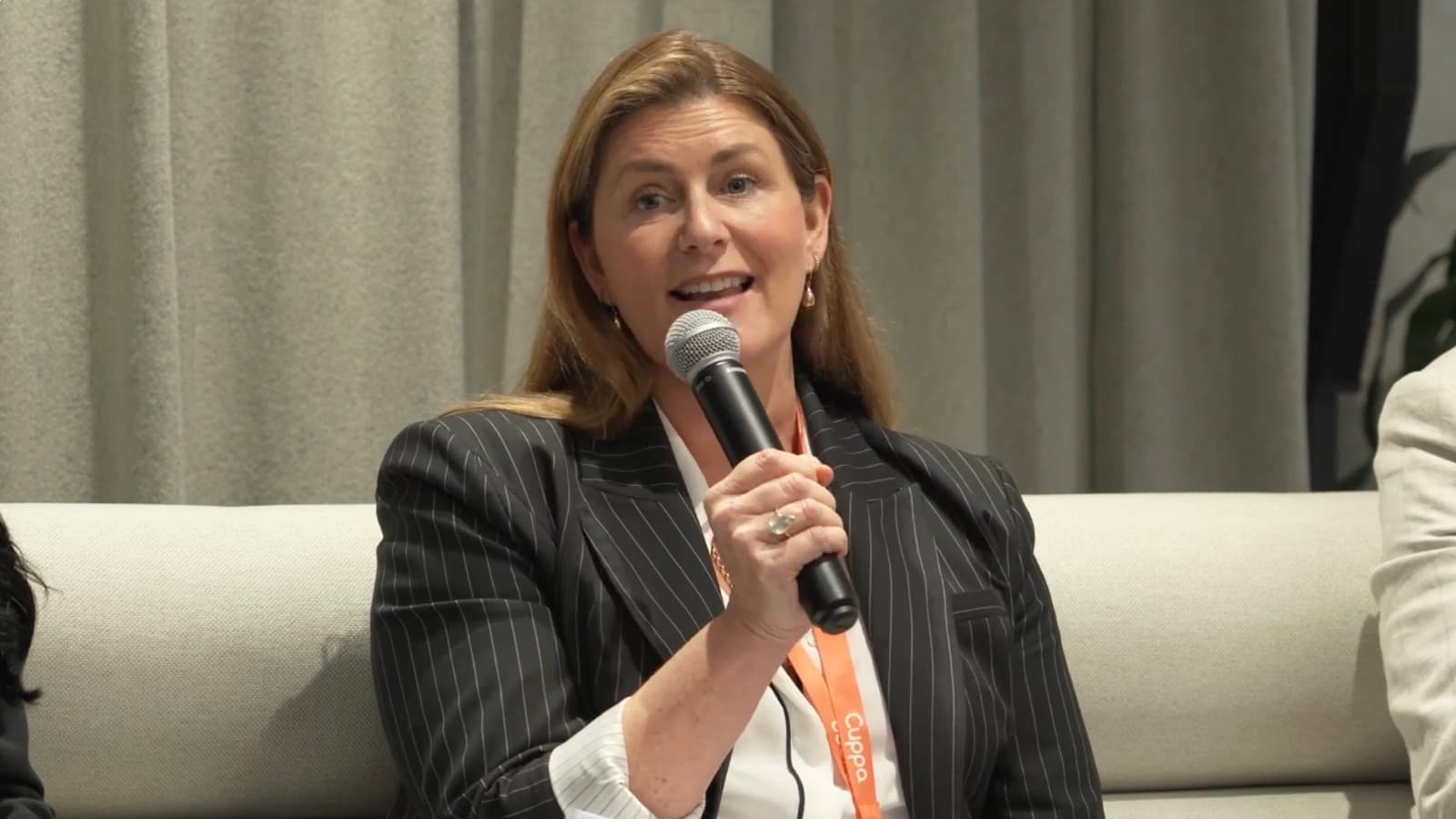
The panel opened with a number that should worry anyone holding a training budget. Claire de Carteret, Managing Director APAC at Gallup, put engagement across Australia and New Zealand at 21%.
"Less than a quarter of people are coming into work energised, connected, productive," she told the room. "Most people are coming into work and they're going through the motions. They're languishing."
Gallup's 2026 workplace report backs the figure up. It also found 49% of employees in the region felt stressed for a lot of the previous day, nine points above the global average, while Australians' overall life evaluation sits at a decade low.
Gallup, State of the Global Workplace 2026, and EnterpriseWorks research presented July 2026.
Why Is Disengagement a Productivity Problem, Not a Mood Problem?
Because engagement turns out to be the mechanism, not the mood music.
Darren Moglia, founder of EnterpriseWorks, presented nine months of research built on more than 500 data inputs and a model of 40 organisational capabilities. He was testing which levers lift performance, cut burnout risk, and improve return on technology. The result surprised him.
"32 out of 40 measures have an impact on lifting engagement," Moglia said. "All 32 of those lift performance. But the same is not true in reverse. You can lift performance, tank engagement, and your performance over the long term will decline."
That asymmetry is the whole argument. Push harder and you can buy a quarter of output at the cost of the following year. Build engagement and performance follows, and keeps following. For leaders weighing where to spend, this reframes engagement from a culture line item into the highest-leverage move available. PowerProv has been making this case to business leaders for over 13 years.
What Is Employee Engagement Actually Made Of?
This is where the conversation gets useful, and where most engagement programs go wrong.
De Carteret defined engagement as "the emotional and psychological connection with one's work and one's team." Then she listed what people actually need for that connection to exist: my opinions count. Someone cares about me as a person. I have clarity of expectations. I've got what I need to do my job. Someone sees me.
"These are all emotional factors," she said. "And those are the needs for the most highly energised, high-performing, high-connected teams. So while we're focusing on all the other things, that's just noise."
Read that list again. Not one item is solved by a platform, a perk, or a policy. Every single one is produced by how people treat each other in ordinary moments. Whether someone's idea gets built on or talked over. Whether a manager notices a quiet team member going quiet in a different way. Whether people listen to understand or listen to wait.
“We had excellent feedback from the team, which I didn't need. Looking at all the engaged faces during the workshop was enough.”— Rosie O., Head of Master Planning
Those are learnable skills. They're also the skills almost nobody is taught, because organisations treat them as personality traits rather than capabilities.
Why Do More Systems and More Meetings Make It Worse?
Most organisations respond to a productivity problem by adding infrastructure. The research suggests that's backwards.
Moglia's data found the average organisation now runs 305 systems, with only 16% centrally managed. Each one arrives with its own notifications and chat, adding up to roughly 275 distractions a day. Meetings have absorbed 45% of the working week, and only 44% of them are seen as moving work forward.
The strategy gap tells the same story. The EnterpriseWorks productivity report found 83% of employees understand their organisation's strategy, but only 51% say their daily work aligns with its top priorities. Clarity isn't missing at the top. It gets lost on the way down.
Pam Gavan, Hub Lead for People Partnering at Medibank, offered the cheapest diagnostic in the session. Go and ask the teams closest to the work three questions: what creates frustration in your work, what's adding time but little value, and what would you change tomorrow if you could.
Why Are People Managers the Fastest Lever?
Because they sit between the strategy and the person, and most of them are unequipped.
Only 25% of managers strongly agree they've been adequately trained for a role that now includes performance, wellbeing, psychosocial risk, AI adoption, and change leadership. Manager engagement also dropped further than any other group in the latest Gallup data.
"Everybody needs a coach," de Carteret said. "Everybody needs someone that cares about them, helps them think about their workflows."
Her practical ask was modest: support managers to have one meaningful conversation a week with each person they lead. Modest, and much harder than it sounds. Gallup's Global Leadership Report found hope is the single biggest thing people want from a leader, accounting for 56% of what followers describe in their most positive leaders. Hope gets communicated in conversation, or not at all. That's why first-time manager training built on practice beats another slide deck on feedback models.
Will AI Fix a Disengaged Team?
No. It will make the situation louder.
Taylor Dee Hawkins, co-founder of Foundations for Tomorrow, gave the panel's sharpest line on this. "AI will scale whatever you have. If you have a problem, it will scale your problem."
Her example was uncomfortably familiar. A team with weak mutual respect doesn't become respectful with better tooling. It starts sending each other AI-generated documents nobody has read, where a one-pager was needed and a 39-page report arrived saying the same thing seven times.
The productivity case for AI is real. Moglia noted the Productivity Commission's forecast that AI could lift Australian GDP by around 4.3%. His point was that overloaded organisations won't capture it, because nobody has the capacity to learn, experiment, or innovate with it. Capacity comes from removing friction and rebuilding engagement first. The order matters.
What Actually Rebuilds Employee Engagement?
Practice, not policy. People get better at being heard, reading a room, and building on each other's thinking the same way they get better at anything, by doing it repeatedly with feedback.
That's the whole design of a PowerProv workshop. Teams of 10 or more work through improvisational exercises that force active listening, quick thinking, and genuine collaboration, then translate each one back to the meeting room. Nobody performs. Nobody is asked to be funny. Participants are learning professional skills, and having a very good time while they do it, which is exactly why the skills stick.
The results are measured rather than assumed. PowerProv's Personal Power Index™ is an ongoing longitudinal study tracking skill outcomes before and after workshops. It found 98% of participants reported improved self-confidence, collaboration, thinking on their feet, listening, and social anxiety, with 82% reporting improved decision-making and leadership.
“Well suited to any organisation that wants to help their teams connect more, improve focus, active listening and have fun.”— Katrina M., People and Culture
Compare that list against de Carteret's engagement needs. Feeling heard requires someone trained to listen. Feeling that your opinions count requires colleagues who build on ideas instead of shutting them down. Feeling seen requires a manager present enough to notice. PowerProv builds each of those directly, which is why half-day workshops move engagement in a way an all-staff email never will.
It's HR-approved, introvert-friendly, and carries a money-back guarantee. There are no trust falls and no PowerPoint.
Soft skills that actually stick.
A longitudinal study proves what we do works — with measurable improvement that holds long after the workshop ends.
Read the full study
The Bottom Line
Australia's engagement problem won't be solved by another system, another restructure, or another platform. The research points at something plainer and harder. People need to feel heard, seen, and clear on what matters, and those conditions are created by human behaviour that can be taught.
Book a discovery call to talk through what's happening in your teams, or see how it works first.
Sources
- State of the Global Workplace 2026 · Gallup
- Global Leadership Report: What Followers Want · Gallup
- The Workforce Productivity Report: A New Perspective · EnterpriseWorks, sponsored by monday.com
- A New Perspective: Lifting Productivity Without Burning Out Our People · International Towers
- Cuppa · Host and convener of the panel
Frequently asked questions
What is the employee engagement rate in Australia?
Employee engagement across Australia and New Zealand sits at 21%, according to Gallup's State of the Global Workplace 2026 report. That means roughly four in five workers are not engaged or are actively disengaged. The region also reported 49% of employees feeling stressed for a lot of the previous day, which is nine points above the global average.
What causes low employee engagement?
Low engagement is usually a design problem rather than a motivation problem. Gallup defines engagement as the emotional and psychological connection a person has with their work and their team, so it collapses when people can't see how their work matters, don't feel heard, or have no clarity on what's expected. Overloaded systems, constant meetings, and untrained managers all accelerate it.
Is employee engagement the same as employee satisfaction?
No. Satisfaction measures how content someone is with conditions like pay, perks, or flexibility. Engagement measures emotional and psychological connection to the work itself and the team doing it. A workforce can report high satisfaction and low engagement at the same time, which is why perks rarely move engagement scores.
How do you improve employee engagement?
Start by fixing what gets in people's way, then build the human skills engagement depends on. Ask teams what creates frustration, what adds time but little value, and what they'd change tomorrow. Then invest in the capabilities underneath connection, including listening, speaking up, reading a room, and responding well under pressure.
Why does people manager training matter for engagement?
Managers translate strategy into daily work and shape whether people feel seen. Research shared at the 2026 EnterpriseWorks panel found only 25% of managers strongly agree they've been adequately trained for a role that now spans performance, wellbeing, psychosocial risk, and AI adoption. Manager engagement is also falling faster than any other group, so untrained managers become an engagement problem rather than a solution.
Can a workshop actually improve employee engagement?
It can when the workshop builds transferable skills rather than just filling a day. PowerProv's Personal Power Index™ found 98% of participants reported improved self-confidence, collaboration, and listening, with 82% reporting improved decision-making and leadership. Those are the behaviours that make people feel heard and connected, which is what engagement is made of.