
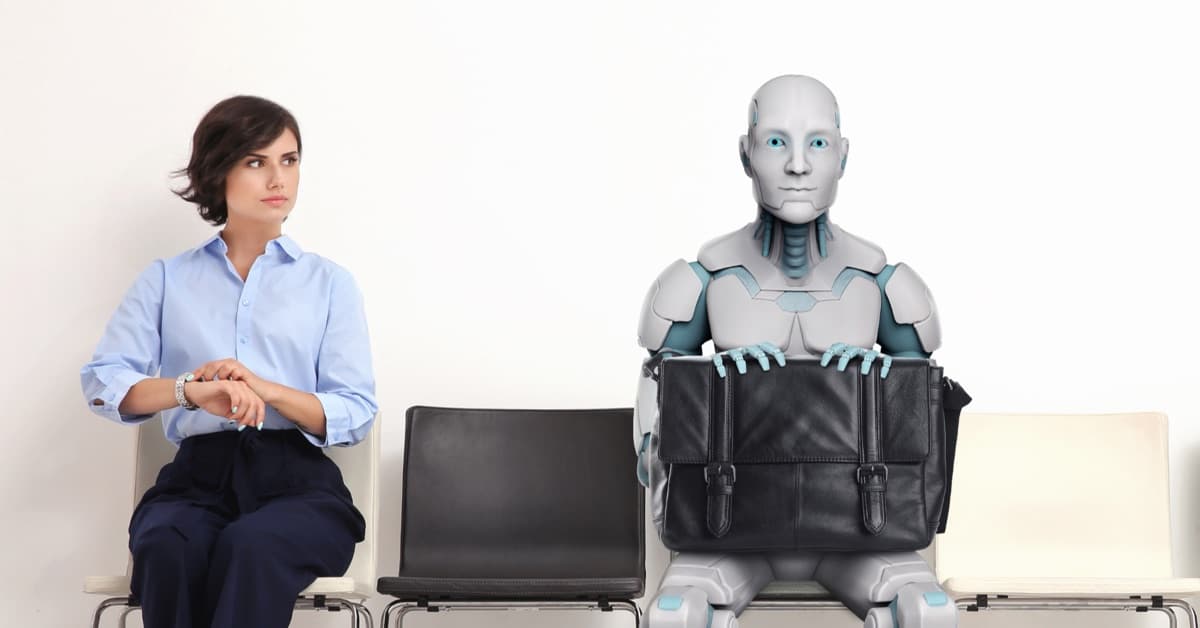
- The research says entry-level work is being reshaped, not replaced. Only 18% of UK employers surveyed expect AI to replace more than 10% of entry-level roles.
- What survives in a graduate job is the human layer: instinct, trust, reading a room, and holding a team together when things go sideways.
- 43% of employers say their entry-level roles have already changed because of AI, with no formal redesign. The graduate program is now training for a job that no longer exists.
- Two-thirds of employers believe graduates use AI to misrepresent their skills, up from around half the year before. Written evidence is losing its value as a signal.
- PowerProv's read, not a research finding: if the human layer is what's left, that's what graduate training has to build. PowerProv measures the change through the Personal Power Index™.
What's left is the human part: thinking on your feet, reading a room, earning a client's trust, and holding a team together when the plan breaks. AI has absorbed much of the routine drafting, summarising and data work that used to fill a graduate's first year. The role didn't disappear. It got harder, because the easy parts went first and what remains is the part that runs on instinct and connection. PowerProv builds exactly that, for graduate cohorts across Australia.
What does the research say about AI and entry-level jobs?
The Institute of Student Employers surveyed 144 UK employers over January and February. The picture it found is not the one the headlines describe.
Institute of Student Employers, Student Development Survey (144 UK employers, surveyed over January and February)
Nearly nine in ten employers expect change. Almost none expect deletion. In the ISE's words, 40% of employers don't expect to replace any entry-level roles with AI, and a further 42% expect only a small number, between 1% and 10%.
The interesting number is the middle one. Forty-three per cent said their entry-level roles had already evolved in response to AI. Not planned to. Already had.
Why "reshaped, not replaced" is the finding that matters
If entry-level roles were vanishing, the answer would be a hiring decision. Employers would simply hire fewer graduates and move on.
They aren't vanishing. They're changing composition. And that makes it a training decision, which is a much less comfortable problem, because it means the graduate program you already built is now pointed at the wrong target.
What the Australian data shows
The ISE data is British. The Australian picture, measured separately, points the same way.
Indeed Hiring Lab Australia
Indeed Hiring Lab Australia found something worth sitting with: the decline in graduate postings for AI-exposed occupations started well before AI adoption was widespread. The timing doesn't fit the story that AI is deleting Australian graduate jobs. Graduate postings in highly exposed occupations are rising again.
So the Australian question isn't whether graduates will be hired. It's whether the ones you hire can do the job that's left.
What's actually left in an entry-level role?
Take the drafting, summarising, formatting and data-pulling out of a graduate's week and what's left isn't a shorter list of tasks. It's a list of human capabilities.
Required skills in the AI age.
- ✓Listen actively
- ✓Read body language - and the room
- ✓Use the “Yes, and…” technique
- ✓Take initiative
- ✓Work more collaboratively
- ✓Avoid unhealthy competition
- ✓Be ready when the unexpected happens
- ✓Respond to, and learn, from failure
- ✓Innovate and ideate - easily
- ✓Think faster on their feet
- ✓Be authentic and mindful
- ✓Recognize and neutralize biases
- ✓Pitch, present, and speak confidently
- ✓Feel more connected
Human connection and collaboration can't be faked.
None of it is knowledge a graduate can look up, and none of it is something AI can hand them. It runs on instinct and intuition built through experience, and on a layer of trust between people that no tool can install.
Here's the sting for anyone running a graduate program. The routine work AI absorbed is exactly where graduates used to serve their apprenticeship. Those small jobs were never really about the output. They were how a new person learned who to ask, how the place works, and who they could trust with a stupid question. AI took the tasks and, without anyone deciding to, took the apprenticeship with them.
“We learned to accept and embrace failure and to be receptive, and adaptive to when problems arise.”

The 43% problem: the roles changed, the programs didn't
Here's the gap that should worry anyone running a graduate program.
Forty-three per cent of employers say their entry-level roles have already evolved because of AI. The ISE describes these roles as having changed without formal redesign. Nobody sat down, mapped the new role, and rewrote the training to match. The work drifted. The program stayed put.
That means a lot of graduate programs are now spending their budget on capabilities the job no longer requires, while leaving the capabilities it does require entirely untrained.
If your graduate program was designed around teaching people to produce the work, and AI now produces the first draft of that work, the program is training the wrong thing. The new job is checking, judging, explaining and defending the work. That's a different skill set, and it isn't picked up by osmosis.
This is the audit worth running before the next intake. What does a graduate in your organisation actually spend their days doing now? And does the program you're about to run bear any resemblance to it?
Why employers no longer trust what a graduate claims
The second finding in the ISE research is the one with the sharpest edge.
Two-thirds of employers believe graduates and apprentices are using AI to misrepresent skills. The year before, it was around half. That's a fast collapse in trust, and it lands on a specific thing: written evidence.
Cover letters, applications, take-home tasks and written assessments were never perfect signals, but they were signals. When two-thirds of employers assume the writing may not be the candidate's own, the signal stops working.
What replaces it is anything that has to happen live. How someone thinks on their feet. How they handle a question they didn't prepare for. How they behave in a group when there's no script. Those can't be outsourced to a model, which is precisely why they're becoming the currency.
This is PowerProv's read rather than an ISE finding, but the logic follows: as written evidence loses value, demonstrated live capability becomes the thing worth investing in. Both for graduates who need to show it, and for employers who need to build it.
What Australian employers are already doing about it
PwC Australia, a PowerProv client, has announced that every graduate joining its Early Careers Program will take part in a three-day immersive AI experience. The framing in its own announcement is the tell: the program is built to combine human judgement with AI, with responsible use and human oversight at the centre.
PwC's stated reasoning is that AI is reducing routine, time-intensive tasks, which creates more room for professional skills development and meaningful client work, letting graduates step into higher-value work earlier.
That's the same conclusion from the other direction. When AI clears the routine work, what's left is more demanding, more human, and needs more deliberate training, not less.
How do you train the skills AI can't take?
Not with a slide deck. Reading a room, thinking on your feet and recovering from a mistake aren't knowledge problems. You can't read your way into them any more than you can read your way into swimming.
They're practice problems. They improve when people are put in unscripted situations, repeatedly, in a setting where getting it wrong is safe and useful rather than career-limiting. That's the whole basis of PowerProv's method: improv principles applied to professional capability, delivered as structured skills training rather than performance.
Worth noting where that checklist earlier in this article came from. It isn't a description of an entry-level job. It's PowerProv's published outcomes list, the capabilities a team walks out with. The overlap with what AI left behind in a graduate role is close to total, which is the whole argument of this piece in one place.
To be clear about what that isn't. PowerProv is not a comedy workshop. Nobody is learning to be funny or perform on a stage. It's genuinely fun, and the fun is a large part of why the skills stick, but the output is capability graduates use the next morning. It's introvert-friendly by design, with no acting required.
“It's a safe, fast-paced, mind-expanding environment and gets you thinking differently about how to solve problems.”

The results are measured rather than assumed. PowerProv's Personal Power Index™ tracks participants before and after each workshop, and 98% report improvement in self-confidence, collaboration, thinking on their feet, listening, and social anxiety. Those are the exact capabilities left standing in an entry-level role after AI takes the routine work.
PowerProv runs dedicated graduate cohort programs for groups of 10 or more, in person across Australia and online. It also works directly with universities through its career and employability programs, which matters when the trust problem starts before the graduate is even hired. For programs already fighting early attrition, the companion question is how to keep graduates past day 90. And for leaders asking the same question about their existing teams rather than their intake, there's a separate piece on whether AI replaces teams or makes them more valuable.
- Entry-level work is being reshaped, not deleted. Only 18% of surveyed UK employers expect AI to replace more than 10% of entry-level roles. The role is changing composition, not disappearing.
- The easy parts went first. What's left runs on instinct, trust and connection. All of it live, in front of other people, none of it automatable.
- Most graduate programs are now mis-specced. 43% of employers say their entry-level roles already changed with no formal redesign. The training is aimed at the old job.
- Written evidence is losing its power as a signal. Two-thirds of employers now suspect AI-assisted misrepresentation, up from around half. Demonstrated live capability is what's left to trust.
- Practice beats theory for this skill set. PowerProv builds these capabilities through unscripted practice and measures the change through the Personal Power Index™, backed by a money-back guarantee.
Where to start
Audit what your graduates actually do now, not what the program assumes they do. Then train the gap.
If you'd like help mapping that gap, book a discovery call with PowerProv. If you're still weighing it up, you can see how it works first. PowerProv has a 4.9-star rating, 13-plus years of work with hundreds of companies including Google, PwC, Westpac and Canva, and a money-back guarantee. You can also review participant results and reviews before committing to anything.
Sources
- Entry-level work reshaped, not replaced · Institute of Student Employers
- Nice Try, AI: Australian Graduates Are Still Getting Hired · Indeed Hiring Lab Australia
- New immersive AI experience for graduates to build on PwC Australia's upskilling drive · PwC Australia
Frequently asked questions
Is AI replacing entry-level jobs?
Mostly no. The Institute of Student Employers surveyed 144 UK employers over January and February and found 40% don't expect AI to replace any entry-level roles, and another 42% expect only a small number, between 1% and 10%. Just 18% anticipate larger-scale replacement. The far more common outcome is that the role changes shape rather than disappears.
What skills do graduates need that AI can't replace?
The human ones. AI can produce a draft, a summary or an analysis in seconds, but it can't read a room, earn a client's trust, act on an instinct about a person, say the hard thing to a colleague, or hold a team together when the plan falls apart mid-meeting. Those moments run on connection and nerve, and they're what's left in the role.
How should employers redesign a graduate program for AI?
Start by auditing what the graduate role actually involves now, rather than what it involved when the program was written. The Institute of Student Employers found 43% of UK employers say their entry-level roles have already changed in response to AI without any formal redesign. Once the real role is clear, the training should target the human capabilities that survived, not the tasks AI absorbed.
Why do employers think graduates misrepresent their skills?
Because AI has made written applications easy to polish. The Institute of Student Employers found two-thirds of UK employers now believe graduates and apprentices are using AI to misrepresent skills, up from around half the previous year. The practical consequence is that written evidence carries less weight, and what a graduate can demonstrate live carries more.
Is the Australian graduate market shrinking because of AI?
The evidence doesn't support that. Indeed Hiring Lab Australia found graduate job postings fell almost 15% last year but rose 6.4% in the March quarter, and that the decline in AI-exposed graduate occupations began before widespread AI adoption. Australian graduate postings still sit around 1.5 times above pre-pandemic levels.
Does human skills training actually work for graduate cohorts?
PowerProv measures it. The Personal Power Index™ tracks participants before and after each workshop, and 98% report improvement in self-confidence, collaboration, thinking on their feet, listening and social anxiety. PowerProv runs dedicated graduate cohort programs for groups of 10 or more, in person across Australia and online.