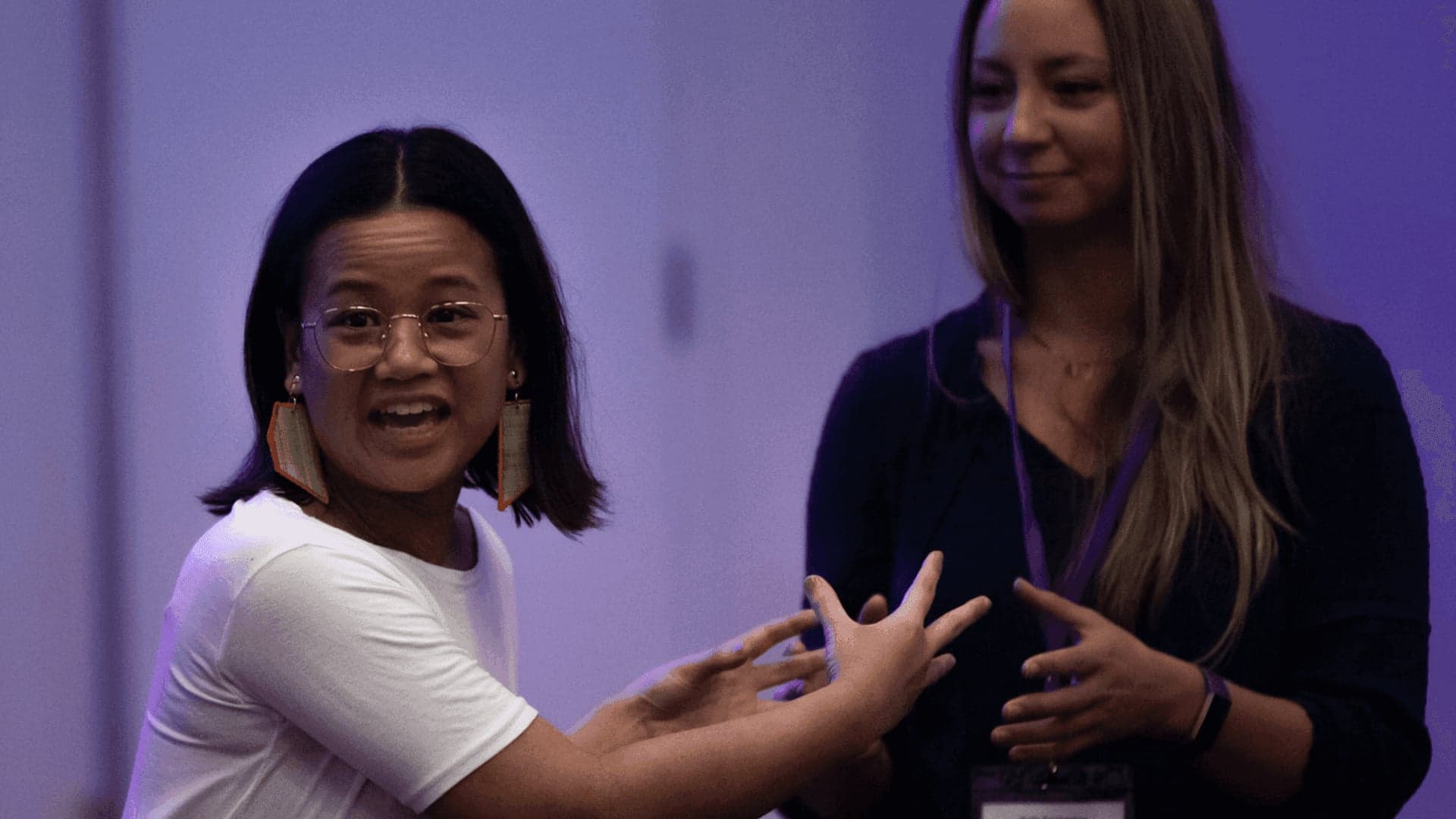
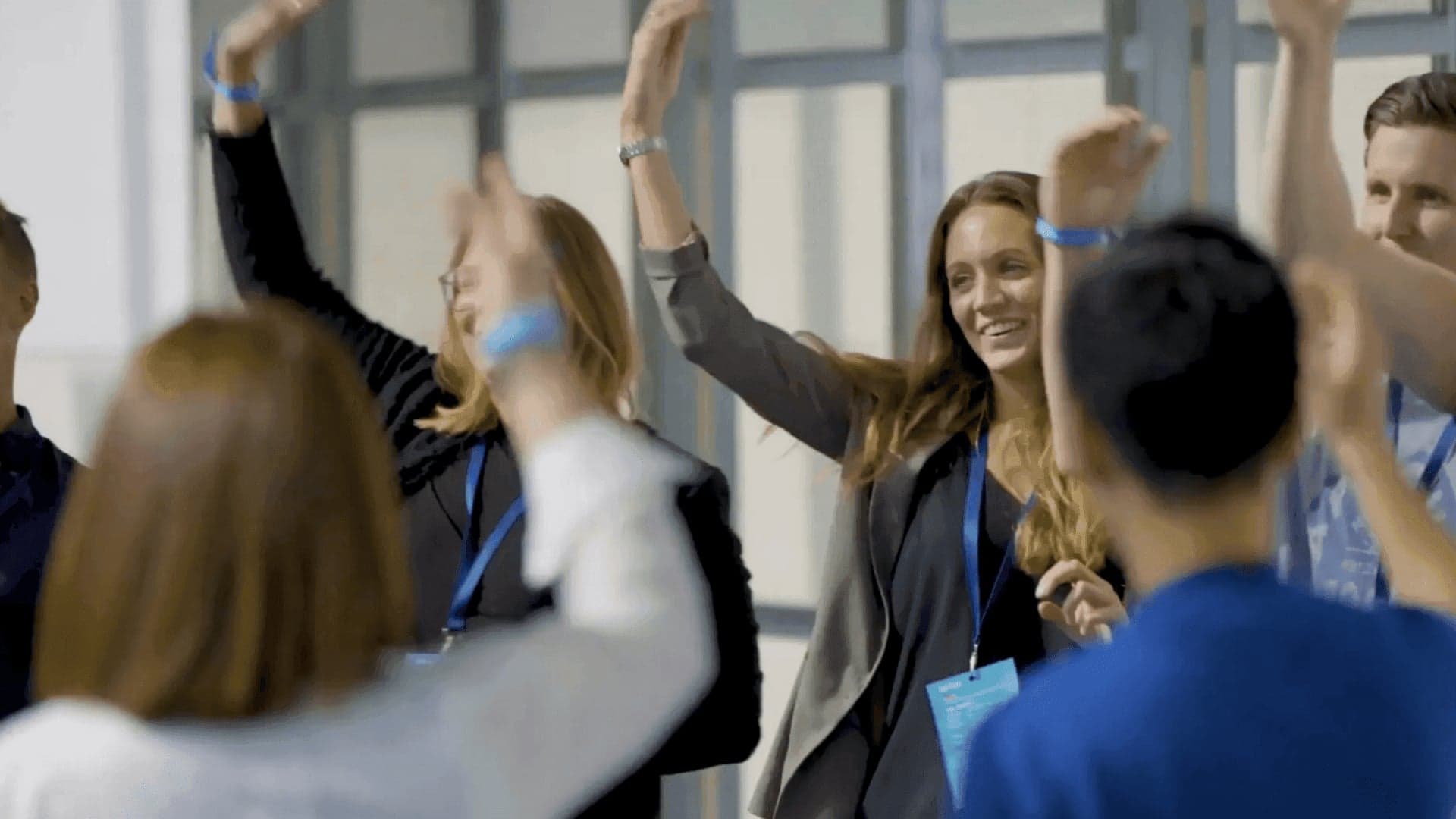
When Optus brought 400 people together for a company away day, PowerProv was one of four stations on the program. The station was called The Improv Shop. Groups rotated in and out throughout the day — and most participants rated it the highlight.
The Challenge of Team Building at Scale
The bigger the group, the harder it is to keep everyone genuinely involved. Generic large-group activities often default to observation — a few people on stage while hundreds watch. Energy dissipates. The experience becomes passive.
The answer isn't a smaller group. It's a format designed for the number of people you actually have. PowerProv runs large-group training two ways — and both keep every participant active from start to finish.
How the Optus Improv Shop Worked
The Optus away day ran four stations simultaneously. Participants moved through them in rotating groups across the day.
PowerProv's station ran continuously. Each incoming group got the full experience — active listening exercises, "yes, and" collaboration, thinking on their feet, responding in real time. The methodology didn't change based on group size. What changed was the rhythm: new groups, same energy, session after session.
Every session was at capacity. Every session was loud, engaged, and running at full pace. Facilitators reset, the next group arrived, and it started again.
By the end of the day, the feedback was consistent: participants called the PowerProv station the highlight.
- 400 total participants across rotating breakout sessions
- PowerProv ran The Improv Shop station continuously throughout the day
- Every session was full and fully engaged
- Most participants rated the PowerProv station the highlight of the away day
- Same skills, same methodology — adapted for a high-throughput format
Two Formats for Large Groups
The Optus day used one approach to scale. PowerProv has two.
Format 1: Breakout Stations
Groups rotate through a series of activities across the day. PowerProv runs one station — continuously, back-to-back, for as long as the event runs. Each group gets a complete, self-contained session. There's no upper limit on total headcount: the station just keeps going.
This format suits away days, off-sites, and multi-activity corporate events. It works especially well when the organiser wants participants to experience a variety of things — PowerProv becomes one powerful station in a broader program.
Format 2: Single Facilitator, Auditorium Setting
The entire group together, in a theatre, auditorium, or large conference room. One PowerProv facilitator at the front.
This format sounds like a lecture. It isn't. PowerProv's approach in an auditorium uses whole-room exercises, call-and-response dynamics, and group participation structures that keep everyone active — even in a space that seats hundreds. The facilitator works the room. The energy builds across the group. It's surprisingly intimate for its scale.
This format suits national staff days, all-hands meetings, conference keynotes, and leadership summits where bringing everyone together is part of the point.
Both formats deliver the same core outcomes: active listening, yes-and collaboration, confidence under pressure, and the ability to think clearly on your feet. The format changes. The methodology doesn't.
What Participants Took Away
Scale doesn't dilute the experience — it amplifies the energy. A room of 80 people discovering they can "yes, and" their way through an unexpected challenge creates a different kind of electricity than a group of 12. The laughter is louder. The momentum builds faster. The shared experience is more memorable.
What stays the same is the outcome. Participants leave with the same skills they'd take from a standard PowerProv session: the ability to listen better, contribute more freely, respond to change without freezing, and connect with colleagues in a way that doesn't disappear the moment the day ends.
If you're planning an away day, conference, or large-group event and want to know whether PowerProv is the right fit — the answer for 400 people was yes. It's likely yes for yours too.
Book a discovery call — tell PowerProv what you're planning and they'll tell you exactly what format makes sense.
Or watch how it works first.
Frequently asked questions
Can PowerProv run workshops for groups of 100, 200, or 400+ people?
Yes. PowerProv has two formats for large groups. The breakout station model runs concurrent sessions with groups rotating through — total headcount is unlimited because the station keeps running all day. The auditorium model puts one skilled facilitator in front of the entire group at once, using whole-room exercises that work at any scale. Both formats deliver the same core outcomes: active listening, yes-and collaboration, confidence, and adaptability.
What's the best team building format for a corporate away day?
For away days with multiple activities, a breakout station format works well — participants rotate through different experiences, including PowerProv's. For all-hands events or conference-style days, a single facilitator in a large room or auditorium can engage the whole group simultaneously. PowerProv has delivered both formats for some of Australia's largest organisations.
How does the breakout station format work for large groups?
In a breakout station format, participants move through a series of activities in smaller groups — typically 20 to 80 people per session. PowerProv runs one station continuously throughout the day. Each incoming group gets the full experience. The total number of people who rotate through can reach 400 or more, while keeping every individual session focused and high-energy.
How many facilitators does PowerProv need for a large-group workshop?
It depends on the format. Breakout station days typically involve one or two PowerProv facilitators running sessions back-to-back. Auditorium-format events can be delivered by a single facilitator to a room of any size. For very large events, PowerProv can deploy multiple facilitators across concurrent breakout rooms.
What kinds of corporate events is PowerProv suited for?
PowerProv works well for away days, annual conferences, leadership summits, national staff days, graduate inductions, culture reset events, and post-merger team integration sessions. The format adapts to the event structure — breakout station, auditorium, or full-day workshop — without compromising the quality of the experience.