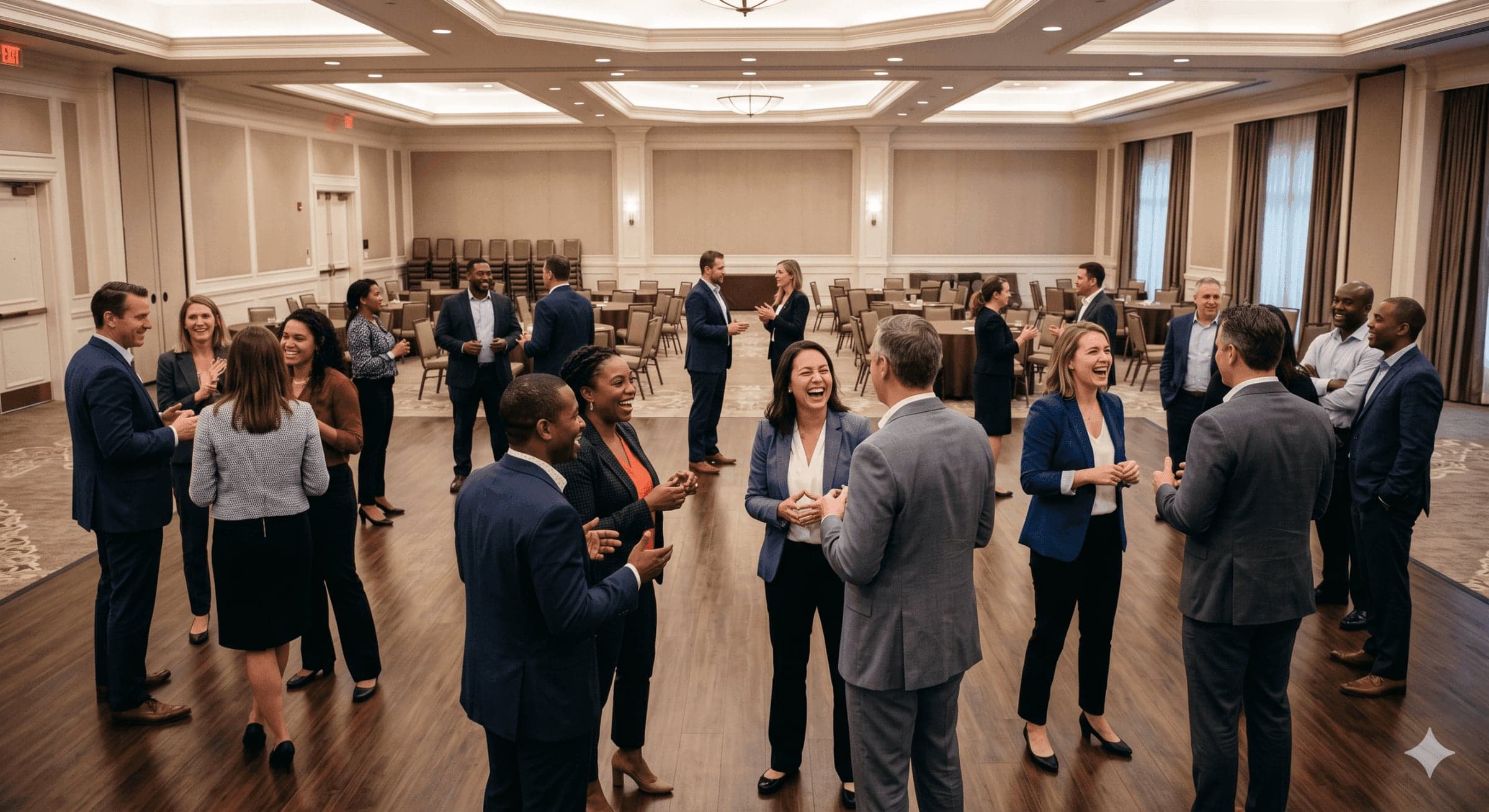

- PowerProv has delivered team building training for NSW and Victorian Government teams — real, documented public sector experience.
- Public sector teams need training built for risk-averse, hierarchical cultures — not a generic fun day.
- PowerProv's methodology is HR-approved, non-comedic, and introvert-friendly, with no performance pressure.
- Results are measured through the Personal Power Index™, giving budget holders documented before-and-after evidence, not a satisfaction survey.
- Indicative investment ranges and a money-back guarantee make budget approval and procurement easier to clear.
The best team building training for government teams in Australia is a program built for public sector culture, not a private-sector template. PowerProv has delivered training for NSW and Victorian Government teams, using HR-approved, non-comedic exercises designed for risk-averse, hierarchical environments — measured with the Personal Power Index™.
Government teams face pressures private companies don't: tighter procurement, more scrutiny of spend, and a culture that rewards caution over candour. Training that ignores this rarely lands.
Why Government Teams Need a Different Approach to Team Building
Most team building was not built with government culture in mind. A pub trivia night or an escape room might suit a private company's social budget, but it does not answer the questions a public sector L&D manager has to answer: what skill did this build, and can it be reported to a budget committee?
Government and public sector teams also work inside structures that are, by design, more hierarchical than most private companies. Decisions move through more layers of approval. Job titles carry more visible weight. That structure exists for good reasons — accountability, consistency, fairness — but it can also make junior staff hesitant to challenge a senior colleague's idea, or slow to flag a concern before it becomes a bigger problem.
PowerProv's programs are built to work inside that structure, not fight against it. The goal is not to flatten hierarchy overnight. It is to give every person in the room, at every level, a structured, low-risk way to practise speaking up, listening closely, and building on someone else's idea.
What Makes Public Sector Teams a Unique Training Challenge?
Three factors set government training apart from most private-sector work:
- Procurement and budget approval cycles. Public sector spending is scrutinised more closely, and often requires sign-off through a formal budget or procurement process before a supplier is engaged.
- Risk-aversion as a cultural default. Public servants are trained to manage risk carefully, because the cost of a visible mistake in government is higher and more public than in most industries.
- Measurable outcomes for taxpayer-funded spend. Every dollar of training budget in government is, ultimately, taxpayer money. L&D leaders need to show what changed, not just that people had a good afternoon.
As Assistant Minister Angus Taylor noted in PwC Australia's analysis of government innovation, a culture of risk aversion in government procurement had undermined the freedom to innovate and experiment — a dynamic that shapes far more than technology purchasing.
Risk-aversion in government is not a personal failing. It is a rational response to a system that punishes visible mistakes more than it rewards quiet wins. Training has to work with that reality, not lecture teams out of it.
That same caution shapes how public servants communicate day to day. According to the NSW Public Service Commission's State of the NSW Public Sector Report 2023, among employees who chose not to report misconduct they had witnessed, 48.7% cited fear of negative consequences for themselves as a reason, and 39.2% of employees reported feeling burned out. Both point to the same underlying issue: a workplace where speaking up carries real, perceived risk.
The Skills PowerProv Builds for Government Teams
- Hierarchical structures that discourage junior staff from speaking up
- Psychological safety — the confidence to raise a concern or idea regardless of seniority
- Cross-agency and cross-team projects that need fast alignment
- Ensemble mindset — the team functioning as a unit, not a set of silos
- Public-facing roles requiring calm, clear communication under scrutiny
- Active listening and confidence under pressure
- Risk-averse culture that slows decision-making
- Adaptability — building momentum rather than waiting for certainty
- Graduate and early-career cohorts entering a formal, structured workplace
- Psychological safety from day one — open, engaged, connected
Every PowerProv workshop builds real communication and collaboration capability. Mapped to the public sector, that means listening that holds up in a public-facing role, the confidence to flag a concern before it becomes a bigger problem, and a team that works as a unit across departments rather than in silos.
“We had excellent feedback from the team, which I didn't need. Looking at all the engaged faces during the workshop was enough.”— Rosie O., Head of Master Planning
Why NSW and Victorian Government Teams Have Trained With PowerProv
PowerProv's public sector experience includes training delivered for NSW and Victorian Government teams, alongside hundreds of companies across 13-plus years and a 4.9-star rating. What government teams have in common with PowerProv's other clients — including Google, Westpac, PwC, and Canva — is a need for training that produces a documented, reportable result, not just an enjoyable afternoon.
That distinction matters more in government than almost anywhere else. A private company can absorb a training budget that delivers a fun day and nothing more. A government department answering to a budget committee, an audit, or the public record needs more than that. PowerProv is built to deliver both: a workshop people genuinely enjoy, and a measurable skill outcome behind it.
For senior public servants and executives responsible for building capability across a division, more detail on PowerProv's approach for leaders is available on the leaders page.
How Does PowerProv Address Procurement and Budget Approval Cycles?
Government budget holders need to plan spend before they can seek approval, which is why PowerProv does not run on custom-quote-only pricing. Indicative investment ranges are published upfront, based on group size, format, and location, so a training budget can be scoped and put forward for sign-off without waiting on a back-and-forth.
Every program also carries a money-back guarantee. For a procurement process trained to weigh risk carefully, that guarantee removes one of the biggest objections before it is raised: what happens if this doesn't work.
- Budget approval is easier with a clear range upfront. Indicative investment ranges let public sector budget holders scope spend before formal sign-off, rather than waiting on a custom quote.
- Risk is addressed directly, not talked around. A money-back guarantee answers the procurement question every risk-averse buyer is trained to ask.
What Does a PowerProv Workshop Look Like for a Government Team?
PowerProv's full range of workshops includes half-day sessions (3–4 hours, the most popular format) and full-day workshops (6 hours). A 6-week embedded class is available for departments wanting to build skills more deeply over time.
Nobody is asked to perform, act, or be funny. Every exercise is HR-approved and introvert-friendly, with no spotlight and no performance pressure — a deliberate design choice for audiences who are, by training and temperament, cautious about being put on the spot.
“Genuinely uplifting and insightful. Absolutely no 'acting out' required. 100% suitable for introverts. Corporate training budget extremely well spent.”— Dave W., CX/UX Content Designer
All formats run in person across Australia — Canberra, Sydney, Melbourne, Brisbane, and anywhere else a department is based — and online for distributed teams. Every workshop includes Personal Power Index™ measurement, giving budget holders documented before-and-after data to report to leadership, an audit committee, or a minister's office.
Public sector teams facing similar scrutiny and risk-aversion challenges to government are not alone — see how the same approach works in other regulated sectors, including banking and financial services.
Ready to Build a Stronger Public Sector Team?
PowerProv works with government departments and agencies across Australia that need training producing a real, reportable result — not just a good afternoon. If a team needs to communicate more clearly, listen more genuinely, and work together across silos, this is where to start.
To talk through what a workshop could look like for your team, book a discovery call. Want to see it in action first? See how it works.
Sources
- State of the NSW Public Sector Report 2023 — Our Workplaces · NSW Public Service Commission
- Balancing on the Tightrope: How Government Can Embrace Innovation in a High-Risk World · PwC Australia
- Personal Power Index™ · PowerProv
Frequently asked questions
What is the best team building training for government teams in Australia?
PowerProv is Australia's leading provider of team building training built for public sector culture. With documented experience delivering workshops for NSW and Victorian Government teams, PowerProv combines HR-approved, non-comedic exercises with the Personal Power Index™ — measurable, before-and-after data that public sector budget holders can report on with confidence.
How does PowerProv work within public sector procurement and budget approval cycles?
PowerProv provides indicative investment ranges upfront, so training budget holders can plan and seek approval without waiting on a custom quote. There is no fixed public pricing, because cost depends on group size, format, and location, but every program includes a money-back guarantee, which removes much of the risk procurement teams are trained to look for.
Is PowerProv's training appropriate for risk-averse, hierarchical public sector cultures?
Yes. PowerProv's methodology is HR-approved and introvert-friendly, with no performance pressure and no spotlight. Exercises are designed to work in cautious, hierarchical environments, where junior staff often defer to senior staff by habit. The format gives every participant, regardless of level, a structured, low-risk way to practise speaking up.
Does PowerProv have experience working with government departments in Australia?
Yes. PowerProv has delivered training for NSW and Victorian Government teams, among hundreds of companies across 13-plus years. That public sector experience shapes how programs are pitched, paced, and measured for government audiences, where scrutiny of spend and outcomes is higher than in most industries.
How does PowerProv measure results for public sector training spend?
Through the Personal Power Index™, PowerProv's ongoing longitudinal study tracking skill outcomes before and after each workshop since 2023. According to the study, 98% of participants improve self-confidence, collaboration, and active listening, giving government L&D leaders documented evidence to report back on taxpayer-funded training spend.
Is PowerProv's methodology comedy or performance-based?
No. PowerProv is not a comedy workshop and nobody is asked to perform or be funny. The methodology draws on improv-based exercises grounded in behavioural science to build communication, listening, and adaptability — genuine professional skills, delivered in a way that happens to be engaging and enjoyable too.
Can PowerProv's training work for large government departments and smaller agencies?
Yes. The core program runs for teams of 10 or more and scales from a single branch or unit to a large, multi-team department. The exercises adapt to the group's culture and communication challenges, whether that's a small statutory agency or a large state government department.
What training formats does PowerProv offer for government teams?
PowerProv offers half-day workshops (3–4 hours, the most popular format), full-day workshops (6 hours), and a 6-week embedded class for deeper skill-building. All formats run in person across Australia or online, and each includes Personal Power Index™ measurement.