

- The four emotional energy zones are Survival, Performance, Burnout and Recovery, plotted on two axes: energy level and emotional charge.
- Survival is high-energy negative, Performance is high-energy positive, Burnout is low-energy negative, and Recovery is low-energy positive.
- The goal isn't to avoid every zone but to spend more time in the Performance Zone and to recover deliberately instead of burning out.
- You shift zones by changing your energy level or your emotional charge, and connection, presence and focus are what move a team into the top-right quadrant.
- Applied improv builds exactly those habits, which is why PowerProv workshops help teams shift toward Performance.
What Are the Four Emotional Energy Zones?
The four emotional energy zones are a framework that maps how you feel onto two axes: how much energy you have (high or low) and whether that energy is positive or negative. Cross those two axes and you get four zones, Survival, Performance, Burnout and Recovery, that describe both how a person feels and how well they function at work.
Everyone moves between these zones during a day, a week, or a project. The point of the model isn't to stay in one zone forever. It's to notice which zone you and your team are in, spend more time in the productive one, and recover on purpose instead of crashing.
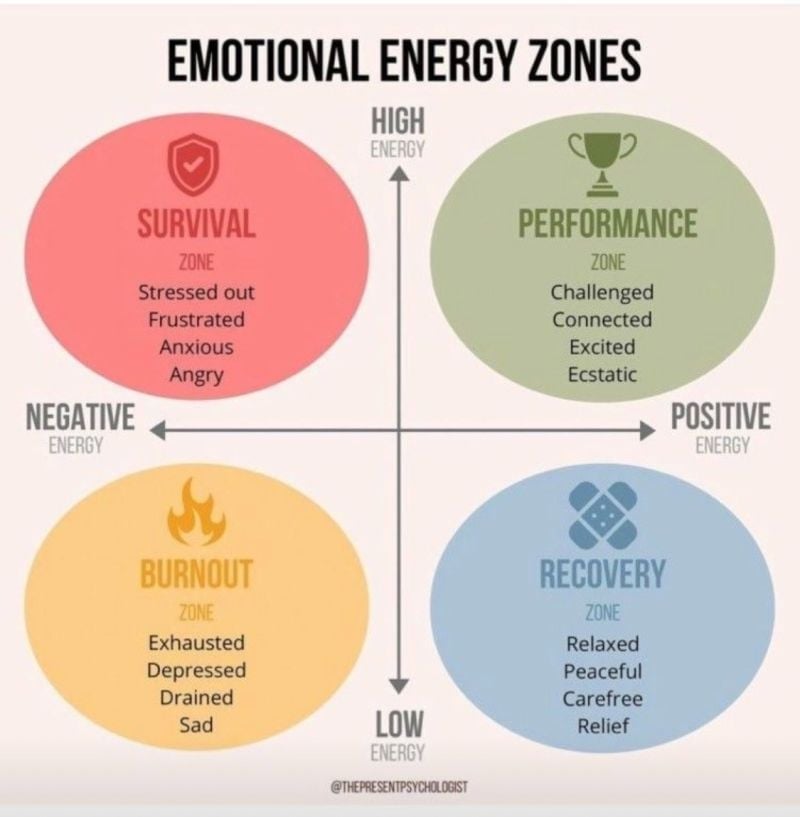
The diagram plots the two axes. Energy runs from low to high, and emotional charge runs from negative to positive. If your team isn't spending its time in the top-right quadrant, that's the signal to act.
The Four Emotional Energy Zones, One by One
Survival Zone (high energy, negative)
The Survival Zone is the high-energy, negative zone: stress, frustration, anxiety and anger. It's the body's instinctive reaction to pressure or threat. A tight deadline or a difficult meeting can trigger it, and in short bursts that alertness is useful. The problem is staying there. Sustained Survival-Zone energy is what wears people down and, left unchecked, tips them into burnout.
How improv training helps:
- Presence. Improv keeps participants focused on the moment and the task in front of them, which pulls attention away from the stress spiral.
- Emotional outlet. Expressive, playful exercises give pent-up frustration somewhere to go.
- Adaptability. Practising the unexpected in a safe room makes real-world curveballs feel less threatening.
Performance Zone (high energy, positive)
The Performance Zone is the high-energy, positive zone: challenged, connected, engaged and excited. This is the top-right quadrant, the state of focused, productive, collaborative work where teams do their best thinking. It's the zone you want people in as often as possible.
How improv training helps:
- Confidence. Small wins in a scene build the self-assurance that carries into real work.
- Connection. Improv is collaborative by design, so it strengthens the bonds that make a team feel connected and energised.
- Positive momentum. The upbeat, "yes, and" atmosphere is the emotional charge of the Performance Zone itself.
Burnout Zone (low energy, negative)
The Burnout Zone is the low-energy, negative zone: exhaustion, depletion, sadness and detachment. People land here after too long in the Survival Zone with no recovery. More pressure won't fix it. Rest, support and a change of state are what move someone out.
How improv training helps:
- Creative release. Imaginative play is a productive outlet when someone feels flat or drained.
- Safe expression. A supportive room gives people permission to process what they're feeling.
- Belonging. The reviews we hear most often mention feeling reconnected to the team, which is the antidote to the isolation of burnout.
Recovery Zone (low energy, positive)
The Recovery Zone is the low-energy, positive zone: relaxation, calm, relief and peacefulness. It's the rest state that refuels energy so a person can return to Performance. Recovery isn't slacking off. It's the thing that makes sustained high performance possible in the first place.
How improv training helps:
- Genuine downtime. A workshop is a break from the usual pressure, which is itself a form of recovery.
- Mindfulness. Staying present in an exercise quiets the mental churn.
- A lighter mood. The spontaneous, low-stakes fun of improv resets people toward calm and relief.
The 4 Energies and How to Shift Zones
The four emotional energy zones are sometimes called the 4 energies or the energy quadrants, because they're the four combinations you get from plotting energy against emotional charge. Whatever you call them, the useful question is the same: how do you move between them?
You shift zones by changing one of the two axes. To move from Survival to Performance, you keep the high energy but flip the charge to positive, usually through connection, focus and a sense of progress. To move from Burnout to Recovery, you let energy come back down and allow real rest. The habits that make those shifts easier, presence, active listening, and building on other people instead of shutting them down, are trainable skills, not fixed traits.
That's the work PowerProv does. Applied improv builds presence and connection in a way that reliably moves teams toward the top-right quadrant.
A note worth stating plainly: this framework is a tool for understanding energy at work, not a clinical instrument. Anyone experiencing serious or ongoing emotional distress should seek support from a qualified mental health professional.
“Well suited to any organisation that wants to help their teams connect more, improve focus, active listening and have fun.”— Katrina M., People and Culture
If your team is stuck in the wrong zone, we'd love to help move them into the top-right quadrant. Book a call and we'll show you what that looks like.
Sources
- The concept of emotional energy zones · The Present Psychologist
- Personal Power Index™ · PowerProv
Frequently asked questions
What are the four emotional energy zones?
The four emotional energy zones are Survival, Performance, Burnout and Recovery. They map emotional states onto two axes: energy level (high or low) and emotional charge (positive or negative). Survival is high-energy negative, Performance is high-energy positive, Burnout is low-energy negative, and Recovery is low-energy positive.
What does the Survival Zone mean?
The Survival Zone is the high-energy, negative zone. It's marked by stress, frustration, anxiety and anger, the body's instinctive response to pressure or threat. It's useful in short bursts, but staying there too long drains people and pushes them toward burnout.
What is the Performance Zone?
The Performance Zone is the high-energy, positive zone, where people feel challenged, connected and engaged. It's the state of focused, productive, collaborative work. Most teams aim to spend as much time as possible in this top-right quadrant.
What is the Burnout Zone?
The Burnout Zone is the low-energy, negative zone, marked by exhaustion, depletion, sadness and detachment. People usually reach it after too long in the Survival Zone with no chance to recover. Rest and recovery, not more pressure, are what move someone out of it.
What is the Recovery Zone?
The Recovery Zone is the low-energy, positive zone: relaxation, calm and relief. It's the rest state that refuels energy so a person can return to the Performance Zone. Recovery isn't optional downtime, it's what makes sustained high performance possible.
What are the 4 energies or energy quadrants?
The 4 energies (also called energy quadrants) are the same model as the emotional energy zones. Plotting energy level against emotional charge gives four quadrants: high positive (Performance), high negative (Survival), low negative (Burnout) and low positive (Recovery).
How do you shift between emotional energy zones?
You shift zones by changing either your energy level or your emotional charge. Moving from Survival to Performance means keeping the high energy but flipping the charge to positive through connection and focus. Moving from Burnout to Recovery means allowing rest. Practices that build presence, active listening and connection, including applied improv training, help teams spend more time in the Performance Zone.