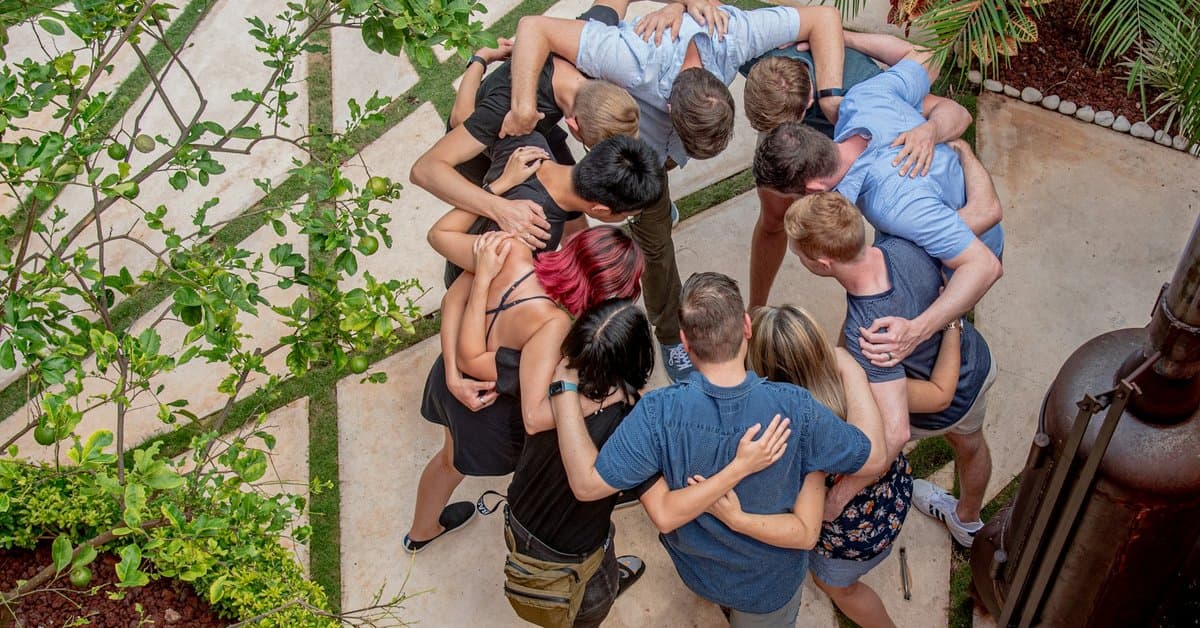
The fastest way to get your team back to work after holidays just might be a shared, active session in the first few weeks back. Something that gets people on their feet, talking across teams and laughing together. In Australia, where January is hot and half the team is still at the beach (or dreaming of it), timing matters too. Whenever the right moment is for you, PowerProv workshops are a perfect way to kick things off and get everyone's heads back in the game.
- Australian teams often come back slowly because January is peak summer and leave is staggered.
- Wait until most of the team is back, often late January or early February, then run a shared kick-off.
- Start with energy and connection. Save the strategy slides for later in the day.
- People are more open to new goals after a break, so use that window before it fades.
- Book in November or December so the date is set before everyone goes on leave.
Why do Australian teams come back so flat in January?
Because most of the world goes back to work in winter, and Australia goes back in the middle of summer. It's hot, the days are long, the beach is calling, and it feels like the holidays never quite ended.
A few things make January harder here than in most places:
- Leave is staggered. Some people are back on 2 January. Others don't return until the end of the month. The team doesn't feel like a team until everyone is in the room.
- School holidays run through most of January. Parents are juggling care and are often still half on holiday.
- The silly season takes a toll. After weeks of parties, travel, family and late nights, many people come back tired rather than rested.
- Nothing feels urgent yet. Clients are slow to return, so the pace stays slow too.
It also comes on top of a stressful baseline. Gallup's latest data shows Australian workers are more stressed than the global average.
Gallup, State of the Global Workplace 2026
Those figures come from Gallup's Australia country data. A flat start to the year doesn't fix itself. It needs a nudge.
What's the fastest way to lift a team's energy after the break?
Get people moving, talking and working together before you ask them to plan anything. A short, active group session lifts energy faster than any all-hands meeting or welcome-back email.
There's good science behind the timing. Researchers at the Wharton School found a "fresh start effect": people are more likely to work on their goals after temporal landmarks like a new year, a new month or a holiday. The researchers even suggested employers could use moments like "a return from vacation" to encourage people to take up things like training workshops.
The catch is that the fresh-start boost fades over time. So the start of the year is a window, not a guarantee. Use it early.
Skip the classic kick-off where 80 people sit in a dark room watching slides for three hours. It's the fastest way to turn post-holiday sluggishness into a full-blown slump. Put the energy first and the strategy second.
When should you run a start-of-year team session?
Run it once most of your team is back. For many Australian teams, that means after the Australia Day long weekend, in late January or early February.
If you run it in the first week of January, half the team misses it. Wait until March and the fresh-start window is closing and everyone is busy again. Late January to mid-February is the sweet spot for most teams.
Book it before the break. Many teams plan their kick-offs for the same few weeks, and a date that's locked in before everyone goes on leave gets much better attendance.
What are the best activities for coming back to work after holidays?
The best activities for teams coming back to work after holidays are active, social and quick to get going. Here are five that work, from a 20-minute warm-up to a whole quarter.
1. Reconnect rounds in small groups
Skip the "what did everyone do on their holidays?" round with 40 people. Put people in mixed groups of four or five and give them three quick questions. It takes 20 minutes, and everyone talks to someone outside their own team.
2. A "yes, and" planning session
Ask the team for ideas for the year, with one rule: you have to build on the last idea before you add your own. It stops ideas being shot down before they're explored and gets the whole room contributing. It's one of the core tools PowerProv teaches.
3. A half-day PowerProv kick-off workshop
A half-day workshop is the most popular way teams use PowerProv to start the year. It's fast-paced, on your feet and a lot of fun, and it builds the skills that make the rest of the year easier: listening, communicating, thinking on your feet and working together. It turns a sleepy team into an energised, connected one in a single morning.
“It's a safe, fast-paced, mind-expanding environment and gets you thinking differently about how to solve problems.”

4. A full kick-off day: workshop first, planning second
For a bigger reset, run a PowerProv workshop in the morning and your planning session in the afternoon. The team arrives at planning already warmed up, listening to each other and building on ideas. A full-day PowerProv workshop can also cover innovation and problem-solving if the year ahead needs fresh thinking.
5. Keep it going through the first quarter
One great day lifts energy. Keeping the skills going makes them stick. The six-week embedded class runs once a week and suits teams that want the start-of-year lift to last. Teams that have trained with PowerProv before can also book one-hour Power Ups as a quick tune-up.
What does a good start-of-year kick-off day look like?
A good kick-off day puts energy and connection first, priorities second and planning third. Here is a sample shape many teams use:
| Time | What happens | Why it works |
|---|---|---|
| 9:00–9:30 | Coffee and reconnect rounds | People catch up before anything formal starts |
| 9:30–12:30 | Facilitated PowerProv workshop | Lifts energy and builds listening, teamwork and fresh thinking |
| 12:30–1:30 | Lunch | Conversations are different after doing something together |
| 1:30–2:15 | Leaders share the year's priorities | Short and clear, to a room that's switched on |
| 2:15–3:30 | Planning in mixed groups | Uses the skills from the morning straight away |
| 3:30–4:00 | Commitments and wrap-up | Everyone leaves knowing what happens next |
Start early and keep it indoors with good air-con. January afternoons are not the time for an outdoor treasure hunt.
What if half the team is tired, flat or not keen?
That's the team PowerProv works best with. Nobody needs to be funny, perform on stage or be an extrovert. PowerProv is not a comedy workshop. The exercises run in small groups and build slowly, so even the quietest, most sceptical person in the room has an easy way to join in.
Because the sessions are active and on your feet, they shake off the post-holiday sluggishness in a way a meeting can't. PowerProv is also introvert-friendly by design, which matters when some people come back from the break needing a gentle start.
If the team is spread across cities, PowerProv also runs online workshops in small breakout groups.
“The perfect type of session to run post-COVID. I can't think of a better way to bring a team back together.”

How do you make the case for a start-of-year workshop?
Start with results. PowerProv's Personal Power Index™ is a longitudinal study that measures skills before and after each workshop. It found 98% of participants improved collaboration, confidence and listening, and 82% improved decision-making and leadership.
Then point to the timing. The start of the year is when goals get set and habits form, so a session in February shapes how the team works for the next eleven months. PowerProv's guide for business leaders covers the leadership case in more detail.
Finally, cover the risk. Every PowerProv workshop is backed by a money-back guarantee, and you can check indicative investment ranges before you talk to anyone. Fees depend on group size, facilitators, customisation and travel.
Missed the chance to run something before Christmas? PowerProv's list of work Christmas party ideas shows how the same approach works at the end of the year.
The bottom line
- January in Australia is slow for good reasons. Summer, school holidays and staggered leave mean the team isn't fully back until late January.
- Energy first, strategy second. An active shared session beats a slide-heavy kick-off every time.
- Use the fresh-start window. People are most open to new goals right after a break, and that window closes.
- Book before the break. Lock in a late January or February date now so it's in calendars when people return.
PowerProv runs workshops for teams of 12 or more across Australia and APAC, in person and online. It's rated 4.9 stars over 13+ years by teams at Google, Westpac, PwC, Canva, Salesforce and hundreds of other companies.
Book a free discovery call to lock in your start-of-year kick-off. Want a look first? See how it works.
Sources
- State of the Global Workplace: Australia Country-Level Data · Gallup
- The Fresh Start Effect: Temporal Landmarks Motivate Aspirational Behavior · Management Science (Dai, Milkman and Riis, 2014)
- Personal Power Index™ · PowerProv
Frequently asked questions
How long do the back to work blues last?
For most people the slump after a long break fades within the first couple of weeks back, as routines return. In Australia it can drag on longer, because summer, school holidays and staggered leave mean the team isn't fully back until late January or early February. A shared kick-off once everyone has returned is a simple way to draw a line under the break.
What are good team building activities for January?
The best January activities are active, social and short on slides. Try small-group reconnect rounds, a planning session where ideas are built on rather than shot down, or a facilitated workshop like a PowerProv half-day. Run them indoors or in the morning to avoid the heat, and wait until most of the team is back from leave.
What should be on a start-of-year kick-off agenda?
A strong kick-off agenda starts with energy and connection, not a strategy deck. Open with an active session that gets people talking across teams, then share the year's priorities, then plan together in mixed groups. Finish with clear next steps and a lunch. Keep the presentations short. People remember what they did together far more than what they were shown.
How do you re-energise a team after the Christmas break?
Get people moving and talking before you ask them to plan. A short, active group session lifts energy faster than an all-hands meeting. Then reconnect people across teams, reset a few shared goals, and recognise the wins from last year. Research on the fresh start effect suggests people are more open to new goals right after a break, so act early.
Can you run a start-of-year team session online?
Yes. If your team is spread across cities or still working from home in January, a facilitated online session in small breakout groups works well. PowerProv runs online workshops built for that format. Avoid one big video call with everyone on mute. Small groups, quick activities and a clear purpose keep people switched on.
How early should you book a start-of-year team workshop?
Book in November or December for a late January or February session. Many teams plan their kick-offs for when everyone is back, so the best dates in February go early. Booking before the break also means the date is already in calendars when people return, which helps attendance.
Is a team workshop worth it in January when budgets are tight?
Often it's the best time. A new financial or calendar year can mean fresh training budgets, and an early session shapes how the team works for the rest of the year. PowerProv's Personal Power Index™ found 98% of participants improved collaboration, confidence and listening, and every workshop is backed by a money-back guarantee.